

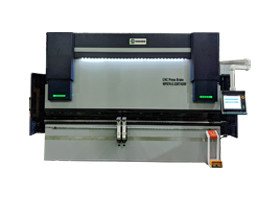
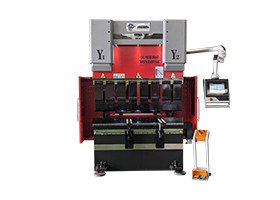
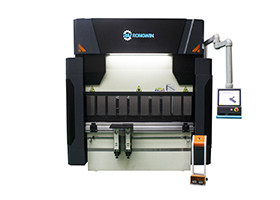
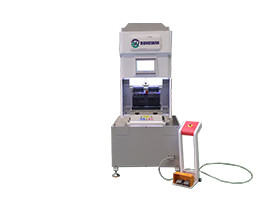












Understanding Mini CNC Hydraulic Press Brake Technology for Modern Metal Fabrication
In the dynamic world of modern metal fabrication, precision, efficiency, and adaptability are paramount. We are constantly seeking tools that can meet these demands, pushing the boundaries of what's possible in sheet metal bending. Mini CNC hydraulic press brakes stand out as a cornerstone technology, offering advanced solutions for intricate and high-volume metal forming. They represent a significant leap from traditional methods, blending the raw power of hydraulics with the intelligence of computer numerical control.
This article will serve as your comprehensive guide to understanding this core technology. We will unveil the fundamental principles, explore the myriad advantages, delve into critical safety and automation features, and provide practical insights to help you select the perfect mini CNC hydraulic press brake for your specific operational needs. By the end, you'll have a clear and deep understanding of how these machines can revolutionize your metal fabrication processes.
Unveiling the Core: What is a Mini CNC Hydraulic Press Brake?
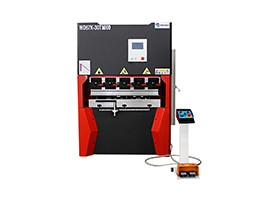
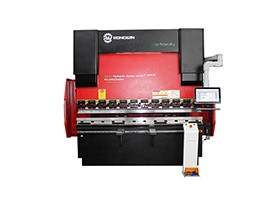
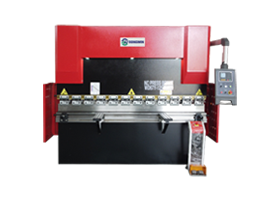
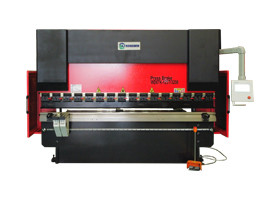
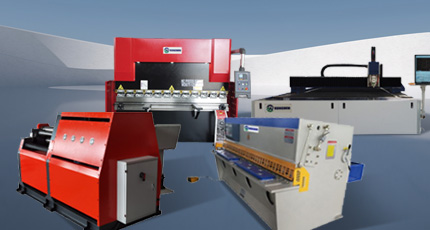
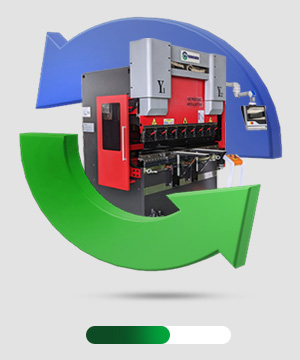
A Mini CNC Hydraulic Press Brake is a sophisticated machine tool designed for bending and forming sheet metal with high precision. It combines three critical technologies: the mechanical structure of a press, the immense force generated by a hydraulic system, and the precise, repeatable control of a Computer Numerical Control (CNC) system. Unlike their larger counterparts, "mini" press brakes are characterized by a smaller footprint and lower tonnage, making them ideal for workshops with limited space or those specializing in smaller, more intricate parts. These compact powerhouses are central to fabricating everything from delicate electronic enclosures to complex automotive brackets.
Defining the Modern Metal Bender
The modern metal bender, embodied by the CNC hydraulic press brake, has evolved far beyond the manually operated machines of the past. Today's machines are a blend of robust engineering and advanced software, designed for accuracy, speed, and repeatability. They are defined by their ability to translate a digital design into a perfectly formed physical part with minimal operator intervention.
The Fundamental Principle: Punch and Die Interaction
At its heart, the bending process is deceptively simple: it relies on the interaction between a "punch" and a "die." The punch, an upper tool attached to the machine's movable ram, descends with great force onto a sheet of metal placed over the die, a stationary lower tool with a V-shaped groove or other custom shape. This action forces the metal to bend into the die's opening, creating a specific angle and radius. The precision of this bend is determined by how deep the punch presses the material into the die space, a method commonly known as "air bending." This technique allows for a wide range of angles to be formed with a single set of tools, simply by controlling the exact stopping point of the ram.
Hydraulic Power: Precision Through Fluid Dynamics
The force required to bend metal, which can range from a few tons to hundreds, is generated by the hydraulic system. This system works on the principle of converting hydraulic fluid pressure into mechanical force. A motor-driven pump pressurizes hydraulic oil, which is then directed into cylinders connected to the ram. As the cylinders fill, they push the ram downward with immense, yet smoothly controlled, power. The key advantage of hydraulics is its ability to deliver full, consistent force throughout the entire bending stroke, adapt to different load requirements, and allow for precise control over the ram's speed and position. This results in uniform, high-quality bends even in thick or high-strength materials.
CNC Control: The Brain Behind the Bends
If the hydraulic system is the muscle, the Computer Numerical Control (CNC) system is the brain. The CNC controller is a sophisticated computer that acts as the operational command center, translating programmed instructions into precise mechanical movements. The operator inputs key parameters such as the desired bend angle, material type and thickness, and flange length into a user-friendly interface, which often features a touchscreen. The CNC then calculates the exact required force and the precise positioning for both the ram's downward stroke (Y-axis) and the backgauge (X-axis), which positions the metal sheet from front to back. This automation ensures that every part is bent with incredible accuracy and consistency, making it possible to produce complex, multi-bend components with perfect repeatability.

Key Components of a Mini CNC Hydraulic Press Brake
Understanding the main components of a press brake is crucial for appreciating its functionality and for making informed decisions during selection and operation. Each part plays a vital role in the machine's overall performance and precision.
| Component | Primary Function | Importance in the Bending Process |
|---|---|---|
| Ram and Bed | Provide the structural foundation and moving force. | The ram holds the punch and moves vertically, while the bed supports the die. Their rigidity and alignment are critical for bend accuracy. |
| Punches and Dies | The tooling that directly shapes the metal. | The geometry of the punch and die (angle, radius) directly determines the final shape of the bent part. |
| Backgauge | Positions the workpiece accurately for each bend. | This automated stop ensures that the bend line is in the correct location, which is essential for repeatability and dimensional accuracy. |
| Control System | The user interface and computer that runs the machine. | The CNC controller allows for programming, storage of jobs, and real-time control over all a xes, ensuring precision and efficiency. |
The Ram and Bed: Foundation of the Bend
The ram and the bed are the two largest structural components of a press brake. The bed is the stationary lower beam, which serves as the worktable and supports the die. The ram is the upper beam that moves vertically, holding the punch and delivering the bending force. The synchronized movement of the hydraulic cylinders ensures the ram descends perfectly parallel to the bed, which is absolutely critical for achieving a consistent bend angle along the entire length of the workpiece. Modern machines often incorporate a crowning system, either hydraulic or mechanical, into the bed to compensate for the minute deflection that occurs under load, ensuring the bend is straight and true from end to end.
Punches and Dies: Shaping the Metal
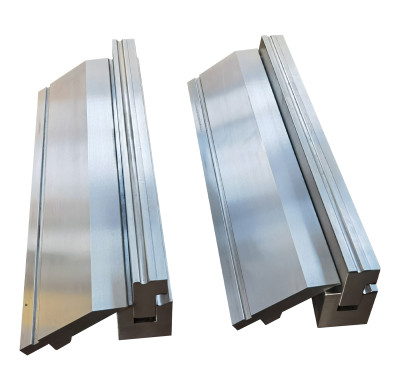
The punches and dies, collectively known as tooling, are the components that actually come into contact with and shape the metal. They come in a vast array of shapes and sizes to accommodate different materials, thicknesses, and bend profiles. Punches can be straight, gooseneck (for clearing previously made flanges), or acute, each designed for specific applications. Dies are typically V-shaped, with the width of the "V" opening being a critical factor in determining the bend radius and the tonnage required. Selecting the correct punch and die set is fundamental to achieving the desired part geometry and preventing material damage.
The Backgauge: Ensuring Positional Accuracy
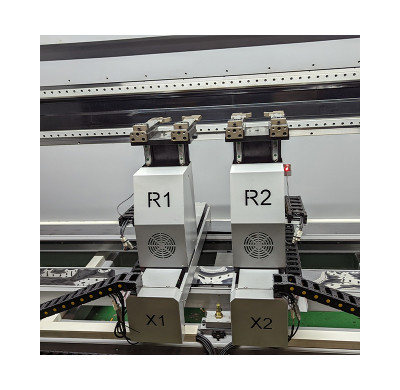
The backgauge is a critical component for ensuring accuracy and repeatability. It is a mechanical stop located behind the die that the operator or an automated system places the sheet metal against before each bend. Its position determines the flange length—the distance from the edge of the sheet to the bend line. In a CNC press brake, the backgauge is a servo-driven system that can move with extreme precision along multiple axes. A simple backgauge moves in and out (X-axis), while more advanced systems can also move up and down (R-axis) and side to side (Z1 and Z2 axes), allowing for the accurate gauging of tapered parts and complex geometries.
The Control System: Our Interface to Precision
The control system, or CNC controller, is the nerve center of the entire machine. Modern controllers feature graphical, touchscreen interfaces that simplify programming and setup. Operators can input part dimensions directly or import them from CAD software. The controller's software can then automatically calculate the optimal bend sequence, select the appropriate tools, and generate the program for the ram and backgauge movements. These advanced systems often include 2D or 3D visualization, allowing the operator to simulate the entire bending process to identify potential collisions or errors before a single piece of metal is used, saving time and reducing scrap.
Precision and Power: The Advantages of Mini CNC Hydraulic Press Brakes in Modern Fabrication
Investing in a mini CNC hydraulic press brake is a strategic decision that brings a host of compelling advantages to a modern fabrication shop. These compact yet powerful machines are engineered to elevate production capabilities by enhancing accuracy, boosting efficiency, and providing a significant return on investment. For businesses looking to gain a competitive edge, understanding these benefits is key.
Unmatched Accuracy and Repeatability
The defining characteristic of CNC press brake technology is its extraordinary precision. In industries like aerospace, automotive, and medical manufacturing, where tight tolerances are not just preferred but mandatory, this accuracy is invaluable. A mini CNC hydraulic press brake delivers this precision consistently, transforming raw sheet metal into perfectly formed components.
Consistent Bends, Reduced Waste
The synergy between the CNC controller and the hydraulic system allows for exceptional ram position repeatability, often within thousandths of an inch. Once the parameters for a job are programmed, the machine can execute the same bend with the same angle and flange length, part after part, run after run. This high level of consistency significantly reduces the scrap rate that often results from the trial-and-error of manual bending. By minimizing material waste and avoiding costly rework, businesses can achieve higher profitability and more sustainable operations.
Handling Complex Geometries with Ease
Modern product design often involves intricate shapes and multiple bends in close proximity. A mini CNC hydraulic press brake, especially one equipped with a multi-axis backgauge, is perfectly suited to handle these challenges. The CNC control can be programmed to execute a complex sequence of bends automatically, repositioning the part with precision between each step. This capability allows fabricators to produce complex components like "S" and "Z" bends, or enclosures with multiple flanges, in a single setup, a task that would be incredibly time-consuming and prone to error on a manual machine.
Enhanced Productivity and Efficiency
In any manufacturing environment, time is money. Mini CNC hydraulic press brakes are designed to maximize throughput and streamline the entire fabrication workflow, leading to significant gains in overall productivity.

Faster Setup and Cycle Times
One of the most significant productivity drains in a fabrication shop is machine setup time. With a CNC press brake, setup is drastically reduced. Operators can recall stored programs for repeat jobs instantly, and programming new parts is made intuitive with graphical interfaces and offline software. This allows shops to switch between different projects quickly and efficiently, making them more agile and responsive to customer needs. Furthermore, the automated movements of the ram and backgauge result in faster cycle times per bend compared to manual positioning, directly increasing the number of parts produced per hour.
Versatility Across Materials and Applications
Mini CNC hydraulic press brakes are incredibly versatile tools capable of working with a wide range of materials, including mild steel, stainless steel, aluminum, brass, and copper. The robust power of the hydraulic system can handle thicker, high-strength materials, while the precise control of the CNC is perfect for delicate, lightweight sheets. This adaptability makes the machine a valuable asset for any shop, whether it serves the automotive, aerospace, construction, or electronics industry. Their ability to handle diverse projects, from single prototypes to large production runs, makes them a flexible and indispensable tool.
Cost-Effectiveness in the Long Run
While the initial investment in a CNC press brake can be higher than for a manual machine, the long-term return on investment (ROI) is substantial. The cost benefits are realized through reduced labor, better material usage, and increased overall operational efficiency.
Lower Labor Costs Through Automation
Automation is a key driver of cost reduction. A CNC press brake automates the most skill-intensive and repetitive aspects of the bending process. This allows a single, well-trained operator to manage the machine, freeing up other skilled workers for tasks that require human ingenuity, like welding or assembly. By reducing the reliance on manual labor for each bend, businesses can lower their direct labor costs per part. This improved operator efficiency and the machine's ability to run with minimal supervision significantly boost a shop's profitability.
Maximizing Material Utilization
Material is one of the biggest costs in fabrication. The high precision and repeatability of a CNC press brake lead to a drastic reduction in scrapped parts. When every part is bent correctly the first time, material waste is minimized. Furthermore, advanced nesting and programming software can help optimize how parts are cut from a master sheet, and the precision of the press brake ensures these optimized blanks are formed correctly, maximizing the yield from every piece of raw material. This contributes directly to the bottom line and promotes more sustainable manufacturing practices.
Optimizing Operations: Safety and Automation in Mini CNC Hydraulic Press Brake Technology
The immense power of a press brake necessitates a rigorous approach to safety. Simultaneously, the drive for greater efficiency has pushed the boundaries of automation. In modern mini CNC hydraulic press brakes, these two domains are deeply interconnected. Advanced safety systems not only protect operators but also enable more seamless and productive automated workflows.
Prioritizing Operator Safety
The point of operation on a press brake—where punch and die meet—is an inherent hazard zone. Consequently, ensuring operator safety is the absolute top priority. In the United States, standards from the Occupational Safety and Health Administration (OSHA), particularly 29 CFR 1910.212, mandate machine guarding to protect operators. The ANSI B11.3 standard provides specific, detailed safety requirements for power press brakes. Modern machines are equipped with sophisticated safety devices designed to meet and exceed these standards, preventing accidents before they can happen.
Light Curtains: A Barrier of Light
A safety light curtain is a presence-sensing device that creates an invisible infrared barrier around the danger zone. The system consists of a transmitter projecting an array of parallel light beams to a receiver. If any of these beams are interrupted by an object, such as an operator's hand, while the ram is in motion, the control system instantly receives a stop signal, halting the machine's movement. This rapid response prevents crushing injuries and allows for a safer operating environment without the need for cumbersome physical guards that can impede workflow.
Laser Safety Devices: Dynamic Protection
Laser-based safety systems offer a more dynamic form of protection. These devices, often mounted directly on the upper ram, project one or more laser beams just below the punch tip. The system moves with the ram and continuously monitors the area immediately surrounding the point of operation. If the laser beam is broken by an obstruction while the ram is closing at high speed, it triggers an immediate stop. Advanced laser systems can distinguish between sheet metal being bent and an operator's fingers, allowing the ram to close at high speed until just before the material is touched, then slowing to a safe speed for the final press. This allows for both maximum safety and high productivity.
The Importance of Safety Protocols
Beyond the technology itself, a culture of safety is paramount. This includes establishing and enforcing strict safety protocols for all press brake operations. Key practices include:
- Daily Inspections: Performing a pre-operation safety check every day to ensure all safety devices, emergency stops, and foot pedals are functioning correctly.
- Proper Training: Ensuring that only authorized and thoroughly trained personnel operate the machinery. Training should cover not just machine operation but also hazard recognition and emergency procedures.
- Lockout/Tagout (LOTO): Always following proper LOTO procedures during maintenance, tool changes, or any instance where an operator must place their hands in the danger zone. This prevents accidental machine activation.
- Personal Protective Equipment (PPE): Mandating the use of appropriate PPE, such as safety glasses and steel-toed boots, at all times.

The Power of Automation
Automation in press brake technology extends far beyond the basic CNC control of the ram and backgauge. It encompasses a range of technologies designed to reduce manual intervention, increase throughput, and enhance consistency, pushing fabrication shops toward the reality of Industry 4.0.
Beyond Basic CNC: Robotics and Automatic Tool Changers
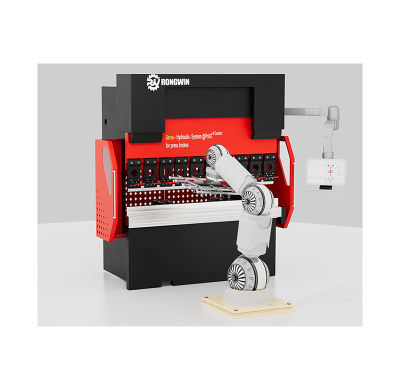
For high-volume, repetitive tasks, robotic press brake tending is a transformative technology. A robot can be programmed to load flat parts into the press brake, reposition them for multiple bends, and stack the finished components, all without human intervention. This not only reduces labor costs and minimizes the risk of ergonomic injuries but also allows for continuous "lights-out" production.
Another powerful automation feature is the Automatic Tool Changer (ATC). Tool changes are often the most time-consuming part of setting up a new job, especially in a high-mix, low-volume environment. An ATC system, which can be a robotic arm or an integrated magazine, automatically removes the current punch and die set and installs the next one required for the job. This can reduce setup times from many minutes to just a few, dramatically increasing machine uptime and profitability.
Streamlining Workflow with Offline Programming
Offline programming software is a crucial element for maximizing the efficiency of a CNC press brake. Instead of tying up the machine while an operator programs the next part on the controller, the programming and simulation can be done on a separate PC in an office environment. The software allows a programmer to import a 3D CAD model, automatically determine the optimal bend sequence, select tooling, and simulate the entire process to check for collisions or other issues. Once finalized, the program is sent to the machine over a network, so it is ready to run as soon as the previous job is complete. This drastically reduces machine downtime and streamlines the entire workflow from design to production.
Real-time Quality Control with Sensor Technology
The latest evolution in press brake technology incorporates advanced sensors for real-time quality control. Integrated laser or optical sensors can measure the bend angle during the forming process itself. If the system detects any deviation from the programmed angle—perhaps due to variations in material thickness or temper—it instantly communicates with the CNC. The controller then makes a micro-adjustment to the ram depth within the same stroke to correct the angle, ensuring the very first part is a good part. This "first-time-right" capability eliminates the need for test bends and manual angle checking, saving material, time, and ensuring a higher level of quality and consistency across a production run.