

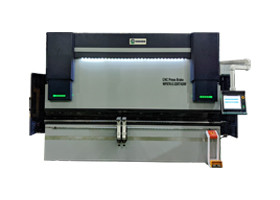
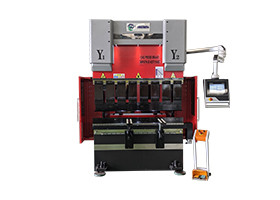
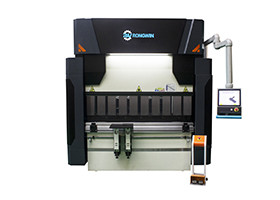
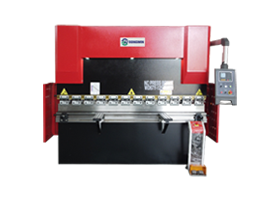
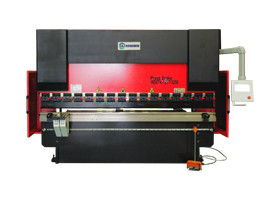


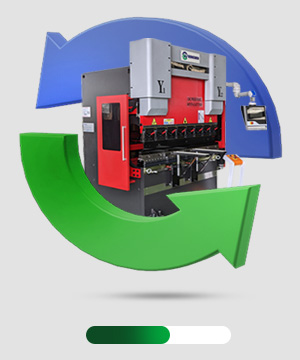





The Ultimate Press Brake Buyer's Guide: Tonnage, CNC Controls & Drive Systems Explained
The Ultimate 2026 Press Brake Buying Guide: Your Blueprint to a Profitable Investment
Published by Nanjing RONGWIN Machinery Technology Co., Ltd. · May 21, 2026 · 15 min read
Choosing the right press brake is one of the most critical investment decisions a metal fabrication business can make. It's not just about horsepower or price; it's about precision, productivity, and long-term profitability. Making the wrong choice can lead to costly rework, bottlenecks on the shop floor, and a machine that fails to meet your evolving customer demands. On the other hand, the perfect machine becomes the heartbeat of your operation, turning flat sheets into high-value components with efficiency and accuracy.
As a leading manufacturer with deep roots in the industry, Nanjing RONGWIN Machinery Technology Co., Ltd. understands that this decision is as technical as it is strategic. This guide synthesizes decades of engineering expertise, global market insights, and the latest in sheet metal bending technology. Whether you're a factory owner upgrading your production line, a distributor expanding your product portfolio, or a job shop making its first major equipment purchase, this blueprint will walk you through every step of the process—from initial assessment to the final installation—empowering you to make a choice that fuels your success for years to come.
Chapter 1: The Strategic Pillar – Why Press Brake Selection Is a Profit-Critical Decision
The purchase of a press brake is far more than a line-item on a capital expenditure report. It is a strategic decision that ripples through every aspect of your business, from production capability to long-term financial health.
- The Cornerstone of Bending Capacity: A press brake isn't just an operational tool; it's the strategic core of your bending capacity. Selecting the right one determines the range of projects you can accept, from crafting thin-gauge electronic enclosures to bending heavy-duty structural components for construction and agriculture.
- The Real Cost of Ownership: A machine's value is not just its sticker price. The true cost includes energy consumption, maintenance requirements, tooling compatibility, operator training, and resale value. A cheaper machine that is difficult to maintain or energy-inefficient will drain profits over its lifetime, proving far more expensive than a well-built, premium solution.
- A Gateway to New Opportunities: The right machine opens doors. It allows you to bid on more complex, higher-margin work that competitors with outdated or incorrectly sized equipment cannot handle. It's an investment in your company's future capabilities, not just its current needs.
Chapter 2: The Core Technical Triad – Tonnage, Bending Length, and Throat Depth
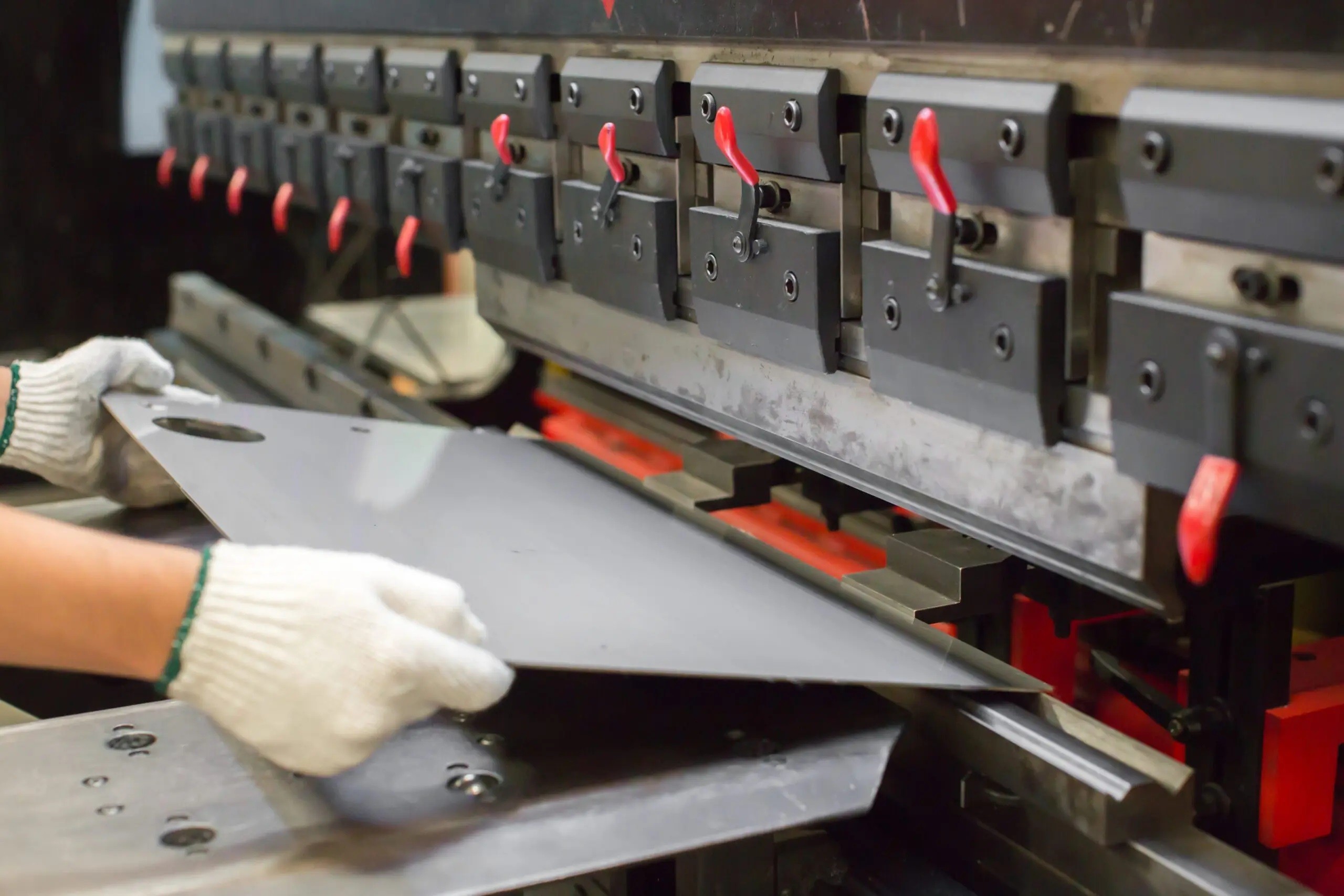
Before diving into brands and drive systems, you must establish the fundamental physical requirements of your machine. This technical triad forms the non-negotiable foundation upon which all other choices are built.
1. Press Brake Tonnage Calculation: Mastering the Force
Tonnage is the maximum force (measured in tons) the press brake can exert to bend metal. Getting this wrong—whether overestimating or underestimating—is a common and expensive mistake.
The Physics of Bending Force
The required tonnage depends primarily on three factors:
- Material Type: High-tensile steel requires significantly more force than mild steel of the same thickness. Stainless steel and aluminum also have unique requirements.
- Material Thickness: The force needed increases exponentially with thickness, not linearly. Doubling the material thickness can require quadrupling the tonnage.
- Die Opening (V-Width): This is the most critical factor in tonnage calculations. A narrower V-opening requires more force to bend the same material than a wider one.
A Step-by-Step Practical Calculation Method
While generic charts can provide a rough estimate, real-world bending requires a more precise approach. Here is a simplified formula used by engineers, as referenced in industry guidelines and machine manuals:
Tonnage per Foot = (Material Tensile Strength (PSI) * Thickness² (inches)) / (Die Opening Width (inches) / 0.6)Example Calculation:
Let's say you need to bend 10-gauge (0.1345 inches) A36 mild steel with a tensile strength of 60,000 PSI, using a standard 1-inch V-die.
Tonnage per Foot = (60,000 * 0.1345²) / (1 / 0.6) ≈ (60,000 * 0.0181) / 1.667 ≈ 1,086 / 1.667 ≈ 6.5 tons per foot.Therefore, to bend a 10-foot-long sheet, you would require a minimum of 65 tons. It is crucial to apply a safety factor, typically 1.5 to 2 times the calculated tonnage, to account for material variations, tooling wear, and to prevent continuous operation at the machine's absolute limit.
Furthermore, it's vital to understand that a machine's rated tonnage is measured under ideal conditions: parallel loading over the full bed length, with standard tooling and mild steel. In a real shop, you must never apply full tonnage over a very short die length (concentrated loading), as this can permanently damage the ram and bed.

2. Bending Length and Throat Depth: Defining Your Dimensional Capacity
- Bending Length: This is the maximum width of sheet metal the machine can bend in a single pass, determined by the distance between the side housings. A common mistake is buying a machine only for current part sizes. Always factor in future products or the ability to bend multiple smaller parts in one setup.
- Throat Depth: This is the distance from the ram's center to the machine's rear frame. A deeper throat allows you to bend complex, box-shaped parts or panels with deep returns without the workpiece colliding with the machine frame.
3. How to Choose a CNC Press Brake for Complex Parts
For most modern shops, a CNC press brake is the only viable choice. When selecting one, consider:
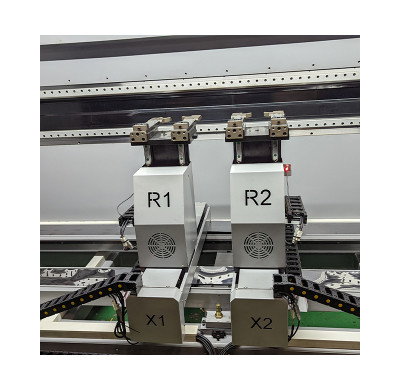
- Number of Axes: A standard 3-axis machine (Y1, Y2, X) is sufficient for basic bending. However, to handle complex parts with varying angles and offsets, you'll need at least a 4+1 axis machine (adding R and Z axes), which automatically adjusts the backgauge fingers for precise positioning.
- Real-World Scenarios: If you produce parts like electrical cabinets, shelving units, or intricate architectural panels, a multi-axis CNC system is no longer a luxury—it's a necessity to achieve the required accuracy and repeatability without constant manual intervention.
Chapter 3: Decoding Drive Systems – Hydraulic, Electric, or Hybrid?
The drive system is the heart of your press brake, directly impacting its precision, speed, energy consumption, and maintenance needs. The choice is no longer straightforward; it must align with your specific operational and economic goals.
Hydraulic Press Brake: The Proven Workhorse
Strengths:
- Unmatched Force and Versatility: Hydraulic systems can achieve extremely high pressing force, making them ideal for a wide range of material thicknesses, from light gauge to heavy plate. They can typically bend thicker and harder materials than other types.
- High-Volume Production: These machines excel in production environments running the same large parts for years. Once the oil warms up and stabilizes, they deliver consistent, powerful strokes for decades.
Weaknesses:
- Energy Inefficiency: Traditional hydraulic systems consume significant energy. The pump often runs continuously, even when the machine is idle, generating heat and wasting electricity.
- Maintenance Overhead: They require regular maintenance, including oil changes, filter replacements, and inspections for leaks in hoses and seals.
Ideal User Profile: A heavy fabrication shop bending thick plates for construction equipment, shipbuilding, or agriculture, where maximum force and long-term durability under high loads are the primary concerns.
Electric Press Brake: The Precision Eco-Warrior
Strengths:
- Premium Efficiency and Precision: Servo-electric motors consume power only during the actual ram movement, leading to 50–70% energy savings compared to conventional hydraulics. They offer unparalleled accuracy, repeatability, and acceleration control.
- Clean and Low Maintenance: With no hydraulic oil, there are no leaks, no warm-up time, and significantly reduced maintenance. This makes them perfect for cleanroom environments or food-grade manufacturing.
Weaknesses:
- Higher Upfront Cost: The initial purchase cost is typically higher than a comparable hydraulic model, which can be a barrier for some buyers.
- Force Limitations: While powerful, they are generally best suited for lighter-gauge to medium-capacity applications.
Ideal User Profile: A high-precision sheet metal manufacturer producing medical devices, electronics enclosures, or aerospace components, where energy savings, cleanliness, and micron-level accuracy are paramount.
Hybrid Press Brake: The Smart Saver's Choice
Hybrid systems combine a hydraulic cylinder with a servo-electric drive. The servo motor drives the oil pump, which pushes the cylinder.
- Why It's a Smart Investment: Hybrid machines offer the best of both worlds. They achieve the high force of hydraulics while approaching the energy efficiency and precision of electric models. The pump only runs when needed, dramatically reducing idle power consumption and noise.
- Technology That Solves Problems: For a shop that needs to bend a variety of materials but also wants to control operational costs, a hybrid machine solves the dilemma of choosing between brute force and smart efficiency. In many cases, the price of a 100-ton hybrid brake is surprisingly close to a premium hydraulic model, making it a very compelling option.
Ideal User Profile: A diverse job shop or a manufacturing OEM that processes a mix of thin and thick materials and seeks an optimal balance between capital cost, energy efficiency, and high-end performance.
Chapter 4: The Intelligent Backbone – CNC Controllers, Automation, and Safety
The press brake's "brain"—its CNC controller—determines how easily you can translate a part drawing into a perfectly bent component. The right controller can dramatically shorten setup times, minimize scrap, and empower less-experienced operators.
A Deep Dive into CNC Controllers
The market offers controllers from basic 2D programming to advanced 3D graphical systems. Key brands you'll encounter and what they represent include:
- Delem (e.g., DA-53T, DA-66T): Known for their intuitive touchscreen interfaces, Delem controllers are user-friendly and popular across a wide range of machines. The DA-66T offers full 3D programming and simulation, directly importing CAD files to automatically generate bend sequences and calculate backgauge positions.
- ESA (e.g., S630, S660): ESA controllers offer a powerful alternative with strong PC-based architecture and robust offline programming software. Their strength lies in complex parts requiring precise angle control and correction databases.
- Cybelec (e.g., CybTouch 12, CybTouch 15): A Swiss brand renowned for its reliability and "smart" adaptive bending capabilities. Cybelec systems often include integrated laser angle measurement to automatically compensate for springback, ensuring first-part accuracy.
Practical Benefit: A controller that enables offline programming allows an engineer to prepare the bending program on a PC while the machine is busy producing a previous batch. This eliminates downtime between jobs and maximizes machine utilization.
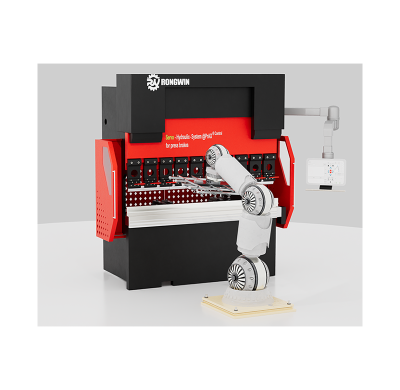
Automation & Tooling: Key to Agile Production
An advanced machine is only as good as its setup time.
- Automated Tool Clamping: Hydraulic or pneumatic tool clamping systems reduce die changeover times from 30-45 minutes to under 5 minutes, enabling profitable small-batch production.
- Backgauge Precision: High-end backgauges with multiple independently controlled axes (e.g., X, R, Z) are essential for precise part location. For bending asymmetric parts, independently moving Z-axes are non-negotiable.
Safety Compliance: A Global Imperative
Compliance with international safety standards is not optional; it's a mandatory aspect of protecting your workforce and business.
- North America (OSHA and ANSI B11.3): These standards require point-of-operation safeguarding, typically achieved through light curtains that stop the machine if an object (like an operator's hand) penetrates the safety field. Two-hand controls are another mandated option for certain operations.
- Europe (EU Machinery Directive and ISO 13849-1): This framework mandates a risk assessment and verification process, requiring safety-related parts of the control system to meet specific Performance Levels (PLr). Laser-based safety systems (like AKAS or DSPR) are common for high-productivity protection, allowing safe high-speed closure with instant stop on obstruction.
To save significant cost and time, always request that your machine is factory-configured to meet your regional safety standards before shipping.
Chapter 5: The Total Investment Guide – Budget, ROI, and Avoiding Common Traps
Understanding the true cost and the path to a strong return on investment (ROI) is essential for making a decision that satisfies both your production team and your financial officer.
Price vs. Cost: A Critical Distinction
A press brake's price tag is just the starting point. The long-term cost includes:
- Energy Consumption: Electric and hybrid machines offer substantial long-term savings over traditional hydraulics.
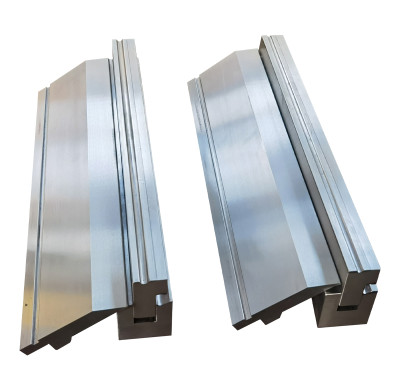
- Tooling Investment: A complete set of precision-ground, hardened punches and dies is a significant cost. Modular tooling systems can help manage this.
- Maintenance and Spares: Factor in the cost and availability of hydraulic oil, filters, and critical spare parts.
- Installation & Training: A stable, level foundation (often requiring a reinforced concrete pad) and comprehensive operator training are crucial and non-negotiable costs for safe, high-quality operation.
2025 Market Price Ranges
While exact prices vary based on configuration, region, and manufacturer, here are indicative ranges for a new CNC press brake:
- Entry-Level Hydraulic (Small tonnage/basic CNC) : $15,000 - $30,000. Suitable for light-duty work, artisans, or small job shops.
- Mid-Range Hydraulic (100-200 Ton, 3-4m, high-quality CNC) : $40,000 - $80,000. The sweet spot for many mid-sized manufacturers and job shops.
- High-End Hydraulic / Hybrid (Advanced automation, large size) : $90,000 - $180,000+. For high-productivity environments requiring advanced features like automatic tool changers.
- Servo-Electric Press Brake: Typically carries a 20-40% premium over a comparable mid-range hydraulic model, but this is offset by lower operating costs.
For example, a 100-ton, 3200mm high-precision hydraulic 4+1 axis CNC press brake from a quality Chinese manufacturer in 2025 can start around the $18,000 mark, though this price will increase with higher specifications and advanced controllers.
5 Press Brake Buying Mistakes to Avoid
- Mistake #1: Obsessing Over Maximum Tonnage: A common yet misguided practice is buying a 200-ton press brake for 100-ton work, assuming it's "stronger and safer." Oversizing leads to higher energy costs, slower ram speeds for thin materials, and unnecessary strain on tooling. Precision and speed suffer for no reason.
- Mistake #2: Ignoring Tooling Capacity: Your tooling (punches and dies) has a tonnage limit, often measured in tons-per-foot. Exceeding this limit, even if the press brake's total tonnage is not reached, can destroy expensive tools and create a safety hazard.
- Mistake #3: Choosing Solely on Brand Prestige: A prestigious logo does not automatically guarantee the best fit for your shop. An expensive machine with features you never use is a wasted asset.
- Mistake #4: Buying a Cheap, Lightweight Machine: A press brake's frame must be massive and rigid. Lightweight frames flex under load, causing the die to deflect, which results in inconsistent bend angles across the part. Buying a rigid frame is buying accuracy and repeatability.
- Mistake #5: Forgetting Future Needs: Don't just spec for the job you have today. The thickness, complexity, and material type of your work will change. A machine with a slightly larger capacity and more advanced CNC controller can adapt to future contracts.
Chapter 6: Partnering with RONGWIN – Your Source for Engineered Bending Solutions
The final and most crucial piece of the puzzle is choosing the manufacturer who will not just sell you a machine but partner in your success. Nanjing RONGWIN Machinery Technology Co., Ltd. stands out as a supplier engineered for the realities of modern manufacturing and the needs of global partners.
Engineered and Built for Your Reality
At RONGWIN, our core philosophy is that a press brake must be a bespoke solution, not just a mass-produced product. We specialize in:
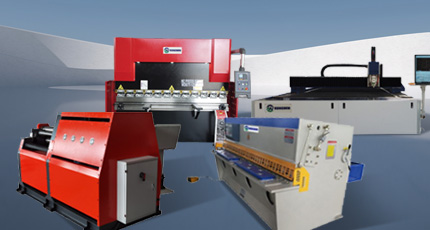
- CNC Press Brakes: The heart of our lineup, designed for precision, durability, and equipped with your choice of world-leading controllers like Delem, ESA, or Cybelec.
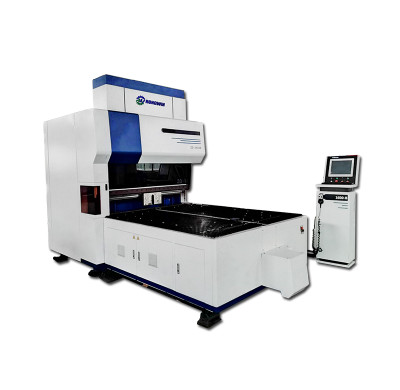
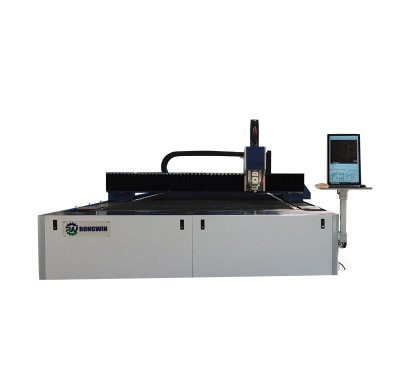
- Laser Cutting Machines: High-speed, high-precision fiber laser cutters that seamlessly integrate with your bending operation.
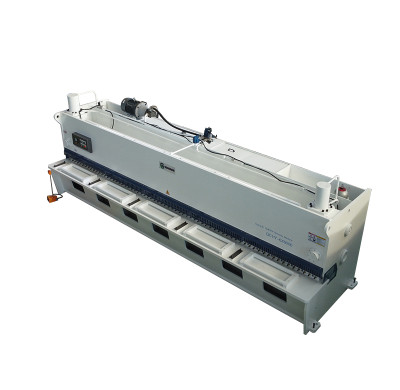
- Shearing Machines: Robust and accurate machines for preparing your blanks, completing the primary sheet metal forming triad.
Our machines are built on a foundation of a heavy, fully-welded steel frame that has been stress-relieved to eliminate deformation over time. This ensures the rigidity required for accurate, deflection-free bending for decades.
Customization Is Our Standard
We understand that standard specifications are just a starting point. Our engineering team works with you to customize:
- Bending Length and Tonnage: To your exact production requirements.
- Throat Depth and Open Height: To handle your most complex parts.
- Backgauge and Axes Configuration: To match your required precision and automation level.
- Safety Equipment: Factory-configured to meet CE, ANSI B11.3, or other regional standards.
More Than a Machine: A Lifetime Partnership
Our commitment extends far beyond the sale. Our goal is to be your lifelong partner in sheet metal processing. This is delivered through our MetalWorkMaster service ecosystem, which provides:
- Lifetime After-Sales Technical Support: Direct access to our expert engineers for troubleshooting and guidance.
- Comprehensive Accessories Support: A ready supply of genuine spare parts and consumables.
- Equipment Upgrades & Modifications: We help your machine evolve with your business.
This holistic approach makes us the ideal OEM partner for overseas distributors and dealers seeking a high-quality, high-value product line to represent, and for factories looking for a direct, reliable source of customized equipment.
Conclusion: Bending Your Path to Success
Choosing a press brake is a journey that requires a careful, informed balance between technical requirements, financial reality, and strategic vision. From the fundamental calculation of bending force to the nuanced differences between a hydraulic workhorse and an electric precision instrument, every decision you make will echo across your production floor for years to come.
By following this guide, you have built a robust framework for your selection process. You now understand that the right machine is not the one with the most prestige or the lowest price, but the one that fits your specific parts, your team's skills, and your business's ambition.
We invite you to put this knowledge into action. Whether you're ready to discuss specifications for a standard model or need a fully customized bending solution, Nanjing RONGWIN Machinery Technology Co., Ltd. is here to help. Contact our team of experts today to explore how our CNC press brakes can become the most reliable and profitable asset in your manufacturing operation. Let's build your future, one precise bend at a time.
Your trusted partner in CNC Press Brakes, Laser Cutting Machines, and Shearing Machines. We provide engineered bending solutions for global distributors, factories, and individual buyers.