











Manual vs. Machine Welding: The Complete Guide to Smart Automated Welding Solutions for 2026
Welding Fundamentals: What Every Manufacturer Should Know
Welding is the cornerstone of modern metal fabrication — a process where heat, pressure, or both fuse metal parts into a permanent, load-bearing joint. Whether in automotive assembly, construction, shipbuilding, or electronics manufacturing, welding determines the structural integrity and service life of countless products. At its core, arc welding uses an electric current to create intense heat between an electrode and the workpiece, melting both to form a strong metallurgical bond upon cooling.
Modern welding spans four primary arc processes: MIG (GMAW) for speed and ease, TIG (GTAW) for precision and quality, MMA/Stick (SMAW) for durability in harsh conditions, and Flux-Core (FCAW) for deep penetration on heavy steel. Beyond these, advanced technologies — laser welding, plasma welding, and robotic welding — are reshaping what is possible on the factory floor. As smart manufacturing and Industry 4.0 accelerate, the distinction between manual skill and machine precision has become the central decision for every fabrication business.
Manual Welding vs. Machine Welding: The Critical Comparison
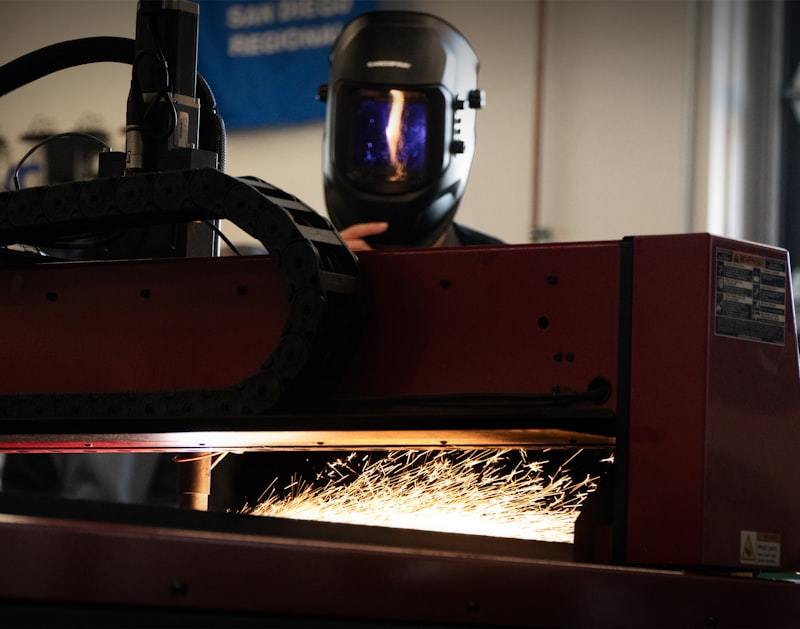
The choice between manual welding and automated machine welding affects throughput, quality consistency, labor costs, and long-term competitiveness. Manual welding relies on the skill of an experienced operator who adjusts technique in real time — ideal for custom, one-off, or repair jobs where adaptability matters more than volume. Machine welding, by contrast, delivers repeatable precision, higher throughput, and reduced rework, making it the preferred solution for smart factory environments and automated production lines.
| Factor | Manual Welding | Machine Welding |
|---|---|---|
| Consistency | Depends on operator skill and fatigue | Uniform, repeatable weld quality |
| Speed | Moderate, constrained by human pace | 2–10x faster; 24/7 operation capable |
| Defect Rate | 2–5% depending on operator | 0.1–0.5% with AI-driven quality control |
| Flexibility | High — handles custom and repair work | Best for standardized, high-volume parts |
| Labor Cost | High — skilled welders are scarce and costly | Lower long-term TCO; one operator oversees multiple cells |
| Data & Traceability | Paper logs or none | Real-time monitoring, digital records, full traceability |
| Best For | Repair, site work, low-volume custom projects | Production lines, EV battery, aerospace, appliances |
The data is clear: robotic welding cells produce welds 3–10 times faster with defect rates as low as 0.1%, while solving the growing skilled labor shortage. For manufacturers evaluating their digital transformation in manufacturing, upgrading from manual to automated welding equipment is often the single highest-ROI investment available. Below, we examine the leading machine welding solutions — starting with products available right now from RONGWIN.
Automated Welding Equipment: The Smart Manufacturing Advantage
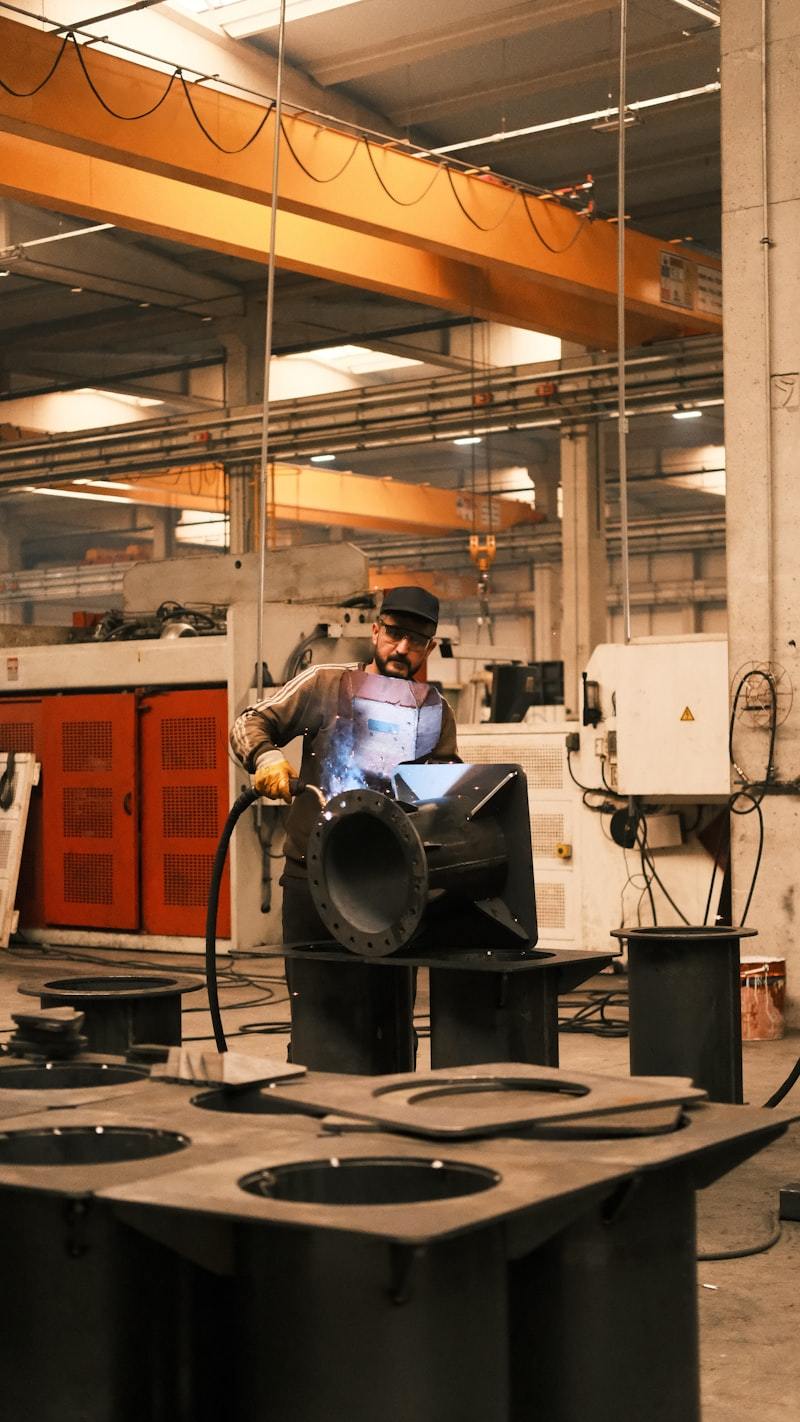
The global automated welding equipment market is projected to grow at a CAGR of 8.3% through 2030, driven by Industry 4.0 integration, labor shortages, and the relentless push for predictable quality at scale. Modern machine welding solutions fall into several key categories:
- Laser welding machines: Fiber laser sources deliver concentrated energy with minimal heat-affected zones. Welding speeds reach up to 5 meters per minute, making them ideal for EV battery tab welding, precision medical devices, and thin-sheet stainless steel fabrication. Handheld models bring laser precision to flexible workshop environments.
- CNC automated welding systems: Computer-controlled welding with programmable paths ensures identical results across thousands of parts. These connected welding systems integrate with factory MES and ERP platforms for end-to-end digital traceability.
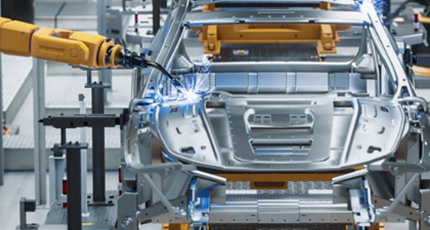
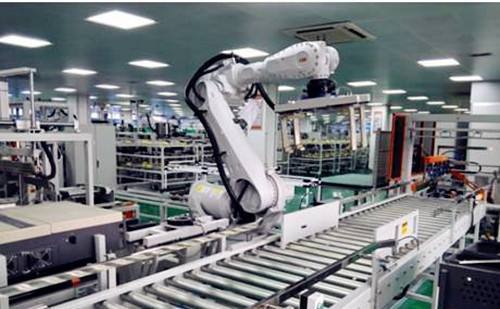
- Robotic arm welding cells: 6-axis articulated robots with AI-powered adaptive seam tracking adjust parameters in real time based on joint geometry — the cornerstone of smart factory welding.
- Specialized seam and spot welders: Purpose-built machines for straight seam welding of tanks, pipes, and sheet metal enclosures, delivering consistent penetration at speeds up to 7,000 mm/min.
Importantly, the shift toward IoT-enabled welding equipment means that today's machines do more than just weld — they collect real-time data on current, voltage, travel speed, and gas flow, feeding into digital twin welding models that predict maintenance needs and optimize parameters before a single arc is struck.
Spotlight: RONGWIN Automatic Vertical Seam Welding Machine
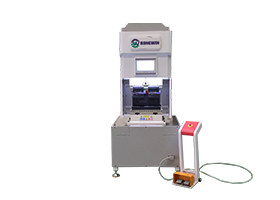
Designed for straight seam welding of stainless steel, carbon steel, and sheet metal parts, the RONGWIN Automatic Vertical Seam Welding Machine is a workhorse for tank manufacturing, pipe production, and sheet metal enclosure fabrication. Key specifications include:
- Welding speed: 0–7,000 mm/min, adjustable for different material thicknesses
- Effective welding distance: 650–950 mm
- Power supply: 220V/50Hz single-phase — compatible with standard workshop electrical infrastructure
- Equipment dimensions: 1,250 × 1,100 × 1,800 mm (main body)
- Expandable: Can be equipped with an additional laser welding machine for hybrid capabilities
- Operating temperature range: -15°C to 45°C
This machine embodies the shift toward connected manufacturing — delivering repeatable seam quality while reducing operator fatigue and rework rates. Learn more about the RONGWIN Automatic Vertical Seam Welding Machine and see how it fits into your production workflow.
RONGWIN Handheld Fiber Laser Welding Machine: Portable Precision Meets Industrial Power
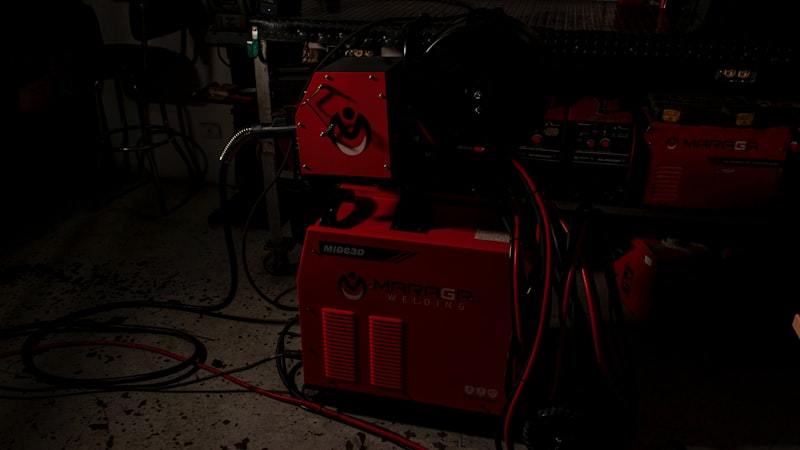
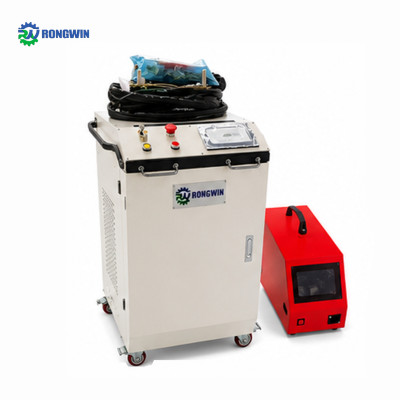
For manufacturers who need laser welding flexibility without a fixed installation, the RONGWIN Handheld Fiber Laser Welding Machine delivers 2,000W of IPG laser power in a portable form factor. This machine represents the next generation of intelligent welding systems — combining the precision of fiber laser technology with the mobility of a handheld tool.
Standout features include:
- 2,000W maximum output power with IPG industrial-grade fiber laser source — industry-leading beam quality and reliability
- Fast welding speed — 2 to 10 times faster than traditional TIG or MIG welding on thin materials
- Clean, smooth weld seams requiring minimal post-weld grinding or polishing
- Low heat distortion — minimal heat-affected zone preserves material properties in stainless steel, carbon steel, and aluminum
- Easy operation — shorter learning curve compared to traditional TIG welding
- 1-year warranty with mechanical test reports and video factory inspection available
This machine is ideal for kitchen equipment manufacturing, door and window fabrication, auto body repair, sheet metal processing, and decorative metalwork — any application where weld appearance and speed matter equally. Explore the RONGWIN Handheld Fiber Laser Welding Machine in detail.
Nanjing RONGWIN: A Complete Range of Industrial Welding Solutions
Founded in 2017 in Nanjing, China, Nanjing RONGWIN Machinery Technology Co., Ltd. has rapidly established itself as a comprehensive metal fabrication equipment supplier serving clients in more than 70 countries across Europe, North America, South America, the Middle East, Southeast Asia, and Africa. The company holds CE and SGS certifications and is committed to building a world-class Chinese metalworking machinery supply chain.
RONGWIN's welding product portfolio extends well beyond the two products featured on this site, encompassing a full spectrum of AI-driven welding solutions for modern manufacturing:
- 3-in-1 Handheld Laser Welding Machine (1500W / 2000W / 3000W): Combines welding, cleaning, and cutting in one unit. Features a safety lock system that activates the laser only when the gun contacts the workpiece. Uses Raycus, Max, or IPG laser sources with real-time temperature monitoring and multi-language support. Weight is approximately 0.7 kg for the handheld gun — comfortable for extended operation.
- CNC Laser Welding Machine: Computer-controlled precision for batch production of metal components in electronic, automotive, and general manufacturing industries. The CNC system stores multiple parameter presets, supporting rapid changeovers between different materials and thicknesses.
- Automatic Robot Arm Fiber Laser Welding Machine: A 6-axis robotic solution for high-volume production lines. Integrates with automated production line systems and supports RS485/Profinet communication protocols for Industry 4.0 smart factory deployment.
- Foot-Operated Spot Welding Machine (RW-35): A compact, reliable spot welder for sheet metal assembly — ideal for enclosures, brackets, and light structural components.
- Automatic Mesh Welding Machine: Purpose-built for durable fence panel and reinforcement mesh production, demonstrating RONGWIN's ability to deliver custom welding solutions for niche industrial applications.
RONGWIN's philosophy — "Let China's one-stop smart custom metal solution serve the world" — is backed by over a decade of exporting experience, professional engineering support, and a rigorous quality management system from raw material inspection through final assembly. The company's OEM and ODM service capabilities mean that clients can receive customized machines tailored to specific production requirements, materials, and throughput targets.
Industry 4.0 and AI-Driven Welding: The Future of Metal Fabrication
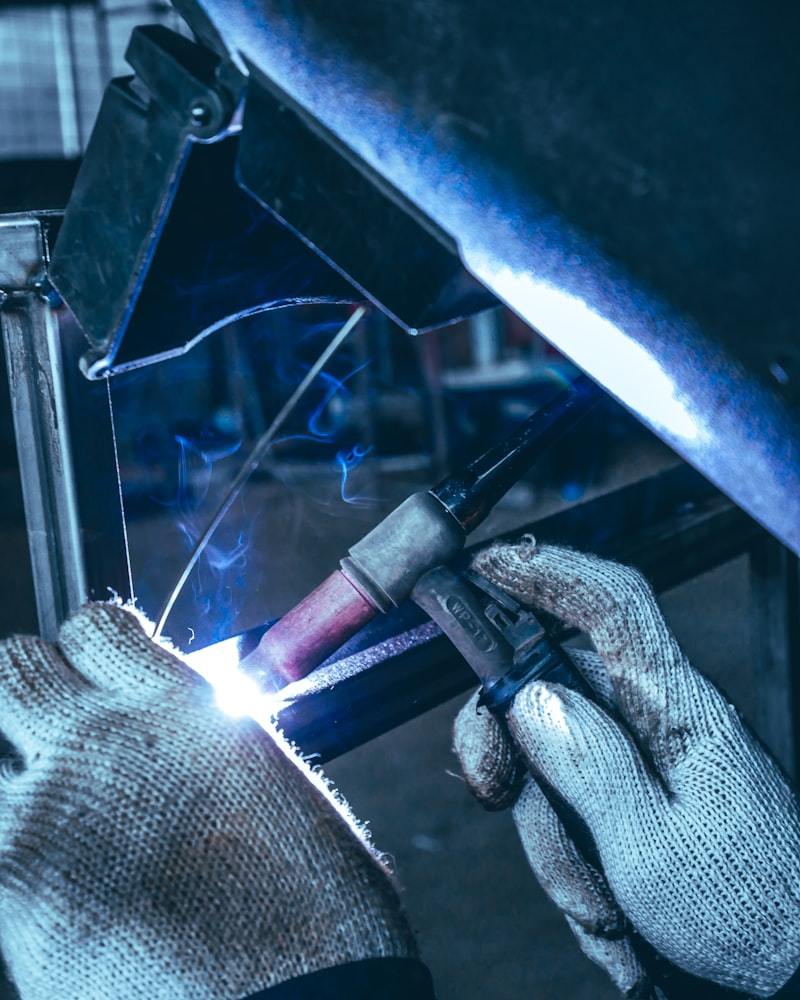
The convergence of generative AI in manufacturing, IoT sensors, and cloud-based analytics is transforming welding from a craft-based trade into a data-driven science. For decision-makers evaluating welding equipment in 2026, understanding these technology trends is essential:
- AI-powered quality control: Machine vision systems with deep learning algorithms inspect every weld in real time, detecting porosity, undercut, lack of fusion, and dimensional deviations at speeds impossible for human inspectors. These systems feed data back to the welding controller for closed-loop parameter adjustment.
- Predictive maintenance: By monitoring current draw, arc stability, cooling system performance, and duty cycle patterns, IoT-enabled welding equipment can predict component failures days or weeks before they occur. This shifts maintenance from reactive to proactive, reducing unplanned downtime by up to 45%.
- Digital twin welding: Before a single physical arc is struck, engineers simulate the weld process in a virtual environment, optimizing torch angle, travel speed, heat input, and sequence. This is particularly valuable for high-value components in aerospace, nuclear, and pressure vessel manufacturing where rework costs are extreme.
- Connected manufacturing ecosystems: Welding machines with RS485, Profinet, or Ethernet/IP interfaces integrate directly into MES and ERP platforms, providing real-time OEE dashboards, energy consumption tracking, and automated work order processing.
- Sustainable manufacturing: Advanced inverter-based welding machines achieve 15–25% energy savings over transformer-based models. Combined with AI-optimized welding parameters, manufacturers can significantly reduce their carbon footprint while lowering electricity costs.
The ROI of welding automation is compelling: robotic cells achieve payback in 12–24 months through reduced rework, faster throughput, and lower consumable costs — while simultaneously building the digital infrastructure that positions manufacturers for the next decade of competition.
How to Choose Between Manual and Automated Welding Equipment
Selecting the right welding machine — whether manual, semi-automatic, or fully automated — requires matching equipment capabilities to your specific production profile. Consider these decision factors:
- Production volume: Low-volume, high-mix work (under 500 parts/month) may justify manual or handheld laser welding. Medium to high volume (500+ identical parts/month) strongly favors automated or robotic solutions.
- Material type and thickness: Thin stainless steel (0.5–3 mm) excels with laser welding. Medium steel (3–10 mm) suits automated MIG. Heavy plate (10 mm+) demands high-amperage automated systems.
- Quality requirements: Industries governed by ISO 3834, ASME Section IX, or AWS D1.1 benefit disproportionately from AI-driven quality control and automated documentation — features that manual welding cannot economically deliver.
- Labor availability: The global shortage of certified welders is acute and worsening. Smart manufacturing investments in automated welding equipment reduce dependency on scarce skilled labor while upskilling your existing workforce into higher-value programming and quality roles.
- Integration readiness: If your facility already uses ERP/MES systems or plans to adopt Industry 4.0 practices, choose welding machines with digital communication interfaces. Retrofitting connectivity later is far more expensive than buying connected welding systems from the start.
Welding Safety in Modern Manufacturing Environments
Whether operating a manual stick welder or overseeing a fleet of robotic welding cells, safety remains non-negotiable. Electric arcs emit intense UV and IR radiation. Hot spatter exceeds 1,500°C. Fume particulates include hexavalent chromium, manganese, and nickel oxides. Modern smart factory environments layer engineering controls with PPE:
- Auto-darkening welding helmets with reaction speeds ≤0.1 ms and adjustable DIN 9–13 shade levels
- Active fume extraction systems with HEPA and activated carbon filtration, integrated into automated production line layouts
- Laser-safe enclosures and interlocked safety zones for all CNC laser welding and robotic cells
- Flame-resistant PPE — leather gloves, welding jackets, and insulated steel-toe boots rated to 200°C
- IoT safety monitoring: Advanced machines log safety interlock status, enclosure door positions, and emergency stop events — creating auditable safety records for ISO 45001 compliance
RONGWIN equipment incorporates multiple safety layers: handheld laser welders feature a contact safety lock that prevents beam emission unless the gun tip touches the workpiece, while automated cells include light curtains, physical guarding, and emergency stop circuits.
Maintenance and Predictive Care for Welding Equipment
The shift from reactive to predictive maintenance is one of the most impactful aspects of Industry 4.0 welding. Traditional maintenance schedules — replacing consumables on a calendar basis — waste money replacing parts that still have useful life and fail to catch degradation that occurs between inspections.
A modern IoT-enabled welding maintenance program includes:
- Daily: Visual inspection of cables, ground clamps, torch leads, and gas hoses for cracks, wear, or loose connections. Gas leak checks using soapy water on all fittings.
- Weekly: Internal cleaning with dry compressed air (30–40 psi) to remove conductive metal dust from IGBT modules and circuit boards — the leading cause of thermal shutdowns in inverter-based machines.
- Monthly: Cooling system inspection — verify fan rotation, clean heatsinks, check water chiller filters and coolant levels. For laser welding machines, inspect protective lens condition and replace if pitted or cloudy.
- Continuous: Real-time monitoring of current waveforms, arc voltage stability, and duty cycle accumulation. Modern RONGWIN machines log this data internally, enabling trend analysis that predicts contact tip wear, liner degradation, and IGBT aging before they cause production stoppages.
A well-maintained inverter welding machine can deliver 8–15 years of reliable service. Intelligent welding systems with built-in diagnostics and remote monitoring extend this further while reducing the maintenance labor burden.
Frequently Asked Questions About Welding Machines
Q: Is a laser welding machine worth the investment compared to traditional MIG/TIG?
A: For thin to medium sheet metal production (0.5–6 mm), laser welding typically delivers ROI within 12–18 months through 2–10x faster welding speeds, near-zero consumable costs, and dramatically reduced post-weld grinding. The weld appearance is superior — smooth, narrow, and aesthetically clean — making it particularly valuable for visible consumer products like kitchen equipment and architectural metalwork. For heavy structural steel above 12 mm, traditional MIG or submerged arc remains more cost-effective.
Q: What is the difference between a 1500W and 3000W handheld laser welder?
A: Power directly determines penetration depth and welding speed. A 1500W laser welding machine typically welds stainless steel up to 4 mm and carbon steel up to 4 mm in a single pass. A 3000W machine extends this to 6 mm in stainless steel and 7 mm in carbon steel, with proportionally faster travel speeds on thinner materials. For most sheet metal fabrication shops, 1500–2000W offers the best balance of capability and cost.
Q: How does robotic welding integrate with smart manufacturing?
A: Modern robotic welding cells connect to factory networks via industrial protocols (Profinet, EtherNet/IP), enabling centralized recipe management, real-time OEE tracking, and automated quality documentation. The digital twin of each weld — including current, voltage, travel speed, and wire feed rate — is stored for every part, creating full traceability for ISO and customer audit requirements.
Q: Can RONGWIN provide custom welding solutions for specific industries?
A: Yes. Nanjing RONGWIN offers OEM and ODM services, tailoring machines to specific materials, production volumes, and integration requirements. Their engineering team can customize everything from welding head configuration to control system interfaces, ensuring the equipment fits your exact production workflow.
Q: What certifications and after-sales support does RONGWIN provide?
A: RONGWIN products carry CE and SGS certifications and come with a 1-year warranty. The company provides 24-hour after-sales response, mechanical test reports, video factory inspection, and ongoing technical support. Spare parts and consumables are stocked and shipped globally.
Conclusion: Power Your Production with RONGWIN Welding Solutions
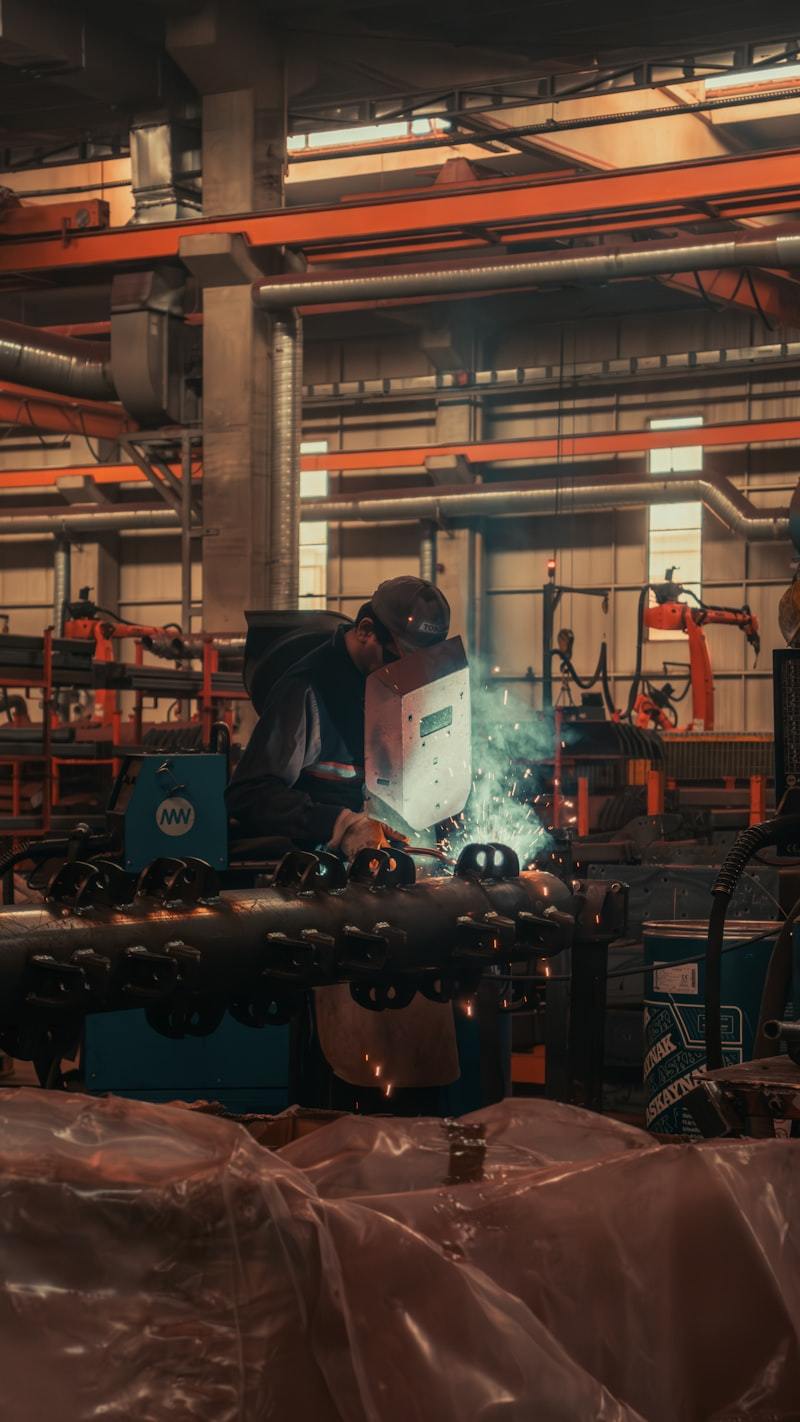
The welding industry is undergoing its most significant transformation in decades. The convergence of fiber laser technology, AI-driven quality control, IoT connectivity, and robotic automation means that the gap between manufacturers who embrace smart welding solutions and those who rely on manual processes will only widen. The data is unambiguous: automated welding equipment delivers higher throughput, lower defect rates, comprehensive traceability, and better unit economics — while simultaneously addressing the global shortage of skilled welders.
Whether you need a handheld laser welding machine for flexible workshop production, an automatic vertical seam welder for consistent straight-seam output, or a fully integrated robotic welding cell for high-volume manufacturing, RONGWIN has the solution. With CE and SGS certified products, engineering support from a team with over a decade of export experience, and a growing presence in 70+ countries, RONGWIN is your partner for the Industry 4.0 journey.
Explore our complete range at the RONGWIN Products page or contact our team for a personalized consultation on selecting and integrating the right welding equipment for your manufacturing goals.