









Fiber Laser Material Cutting Guide 2026: Carbon Steel, Stainless, Aluminum, Brass, Copper, Titanium
The Complete Fiber Laser Material Cutting Guide: Carbon Steel, Stainless, Aluminum, Brass, and More
A fiber laser cutting machine is not a "cut-anything" tool. Each metal — carbon steel, stainless steel, aluminum, brass, copper, titanium — has its own optimal laser power, assist gas, cutting speed, and edge-quality characteristics. Using the wrong parameter combination wastes material, destroys expensive nozzles and lenses, and in the case of highly reflective metals, can permanently damage the laser source through back-reflection.
This guide compiles the verified cutting parameters for every common industrial metal, drawn from RONGWIN application lab data and production floor results from over 3,000 deployed fiber laser machines. Whether you are cutting 0.5mm stainless foil or 50mm structural steel plate, use these tables as your starting point.
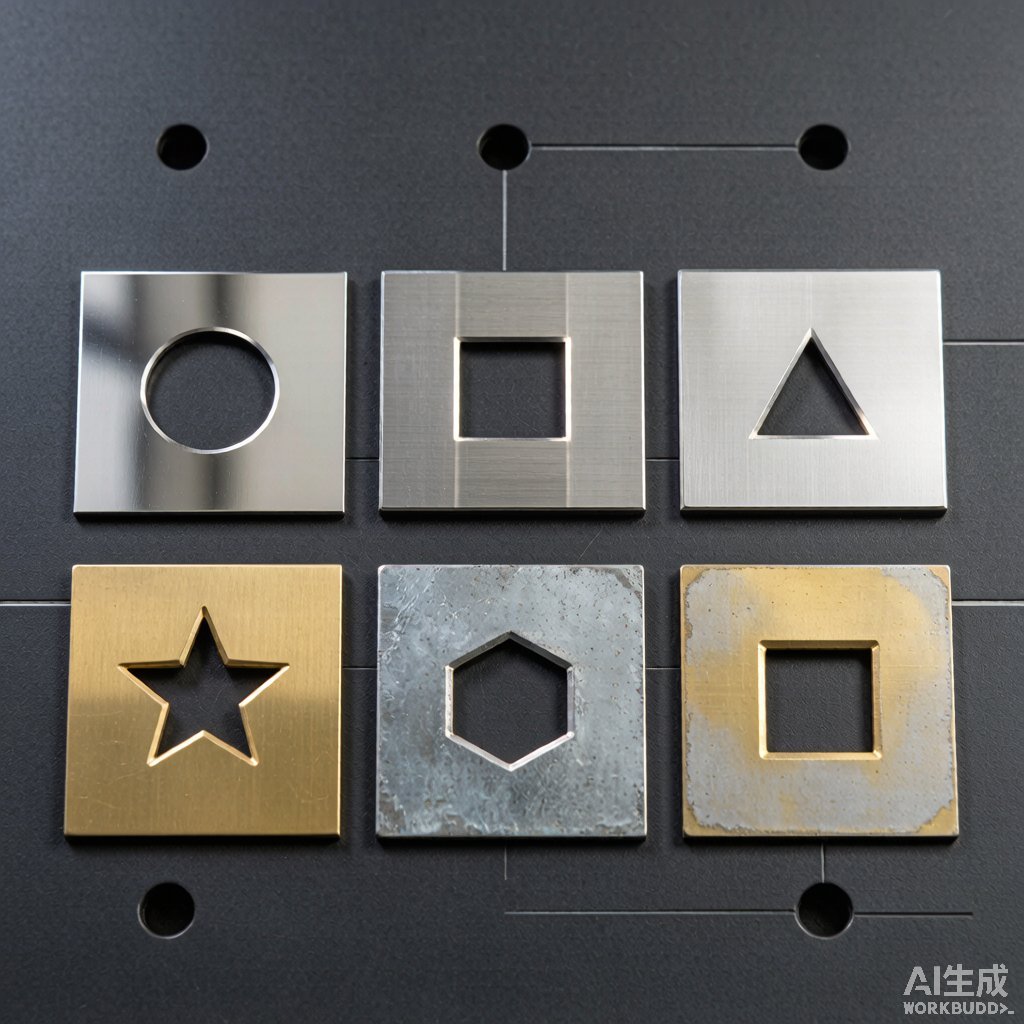
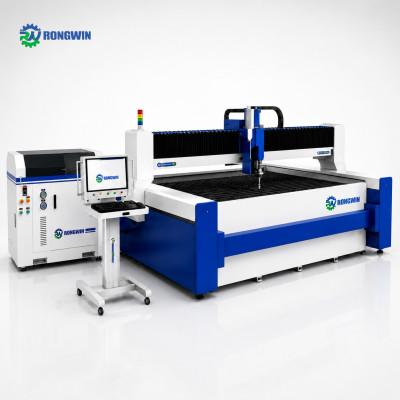
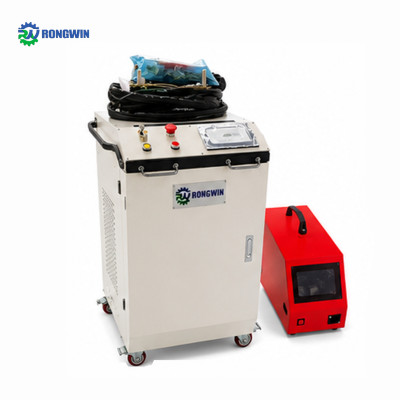
Complete material cutting parameters for all RONGWIN fiber laser cutting platforms.
Carbon Steel (Mild Steel) — The 80% Material
Carbon steel represents approximately 80% of all industrial fiber laser cutting throughput. It cuts cleanly, absorbs fiber laser wavelengths efficiently (~35% absorption at 1070nm), and responds predictably to assist-gas parameter changes.
Recommended Assist Gas: Oxygen (O2)
Oxygen is the standard assist gas for carbon steel. The exothermic reaction between oxygen and iron adds 30–50% effective cutting power (at the cost of a slightly oxidized cut edge). For applications where the oxidized edge is unacceptable (paint adhesion, welding without grinding), switch to nitrogen — but expect 25–35% slower cutting speeds.
Cutting Parameters — Carbon Steel with Oxygen
| Thickness (mm) | Power (W) | Speed (m/min) | O2 Pressure (bar) | Nozzle Diameter (mm) | Focus Position (mm) |
|---|---|---|---|---|---|
| 1.0 | 1000 | 12.0–15.0 | 0.8 | 1.0 S | 0 |
| 3.0 | 1500 | 6.0–8.0 | 0.8 | 1.2 D | +1.0 |
| 6.0 | 3000 | 4.0–5.5 | 1.0 | 1.5 D | +2.0 |
| 10.0 | 3000 | 1.8–2.5 | 1.2 | 1.5 D | +2.5 |
| 12.0 | 4000 | 1.5–2.0 | 1.2 | 2.0 D | +3.0 |
| 16.0 | 6000 | 1.0–1.4 | 1.2 | 2.0 D | +3.5 |
| 20.0 | 6000 | 0.7–1.0 | 1.5 | 2.5 D | +4.0 |
| 25.0 | 12000 | 0.8–1.1 | 1.5 | 2.5 D | +5.0 |
| 30.0 | 20000 | 0.6–0.9 | 1.5 | 3.0 D | +6.0 |
| 40.0 | 30000 | 0.4–0.7 | 1.5 | 3.0 D | +8.0 |
| 50.0 | 40000 | 0.3–0.5 | 1.8 | 4.0 D | +10.0 |
Nozzle type key: S = single-layer (thin sheet), D = double-layer (thick plate). Focus position "+" means above the material surface.
Pro tips for carbon steel:
- Pierce at 60–70% power for 0.5–2.0 seconds before ramping to 100% for the cut line — this prevents the pierce splash from damaging the nozzle.
- For oxygen-cut edges that will be painted, use a slightly higher oxygen pressure (+0.2 bar) to minimize oxide scale thickness.
- If the cut edge shows regular "drag lines" at >5° angle, reduce speed by 10–15% or increase focus position by 1–2mm.
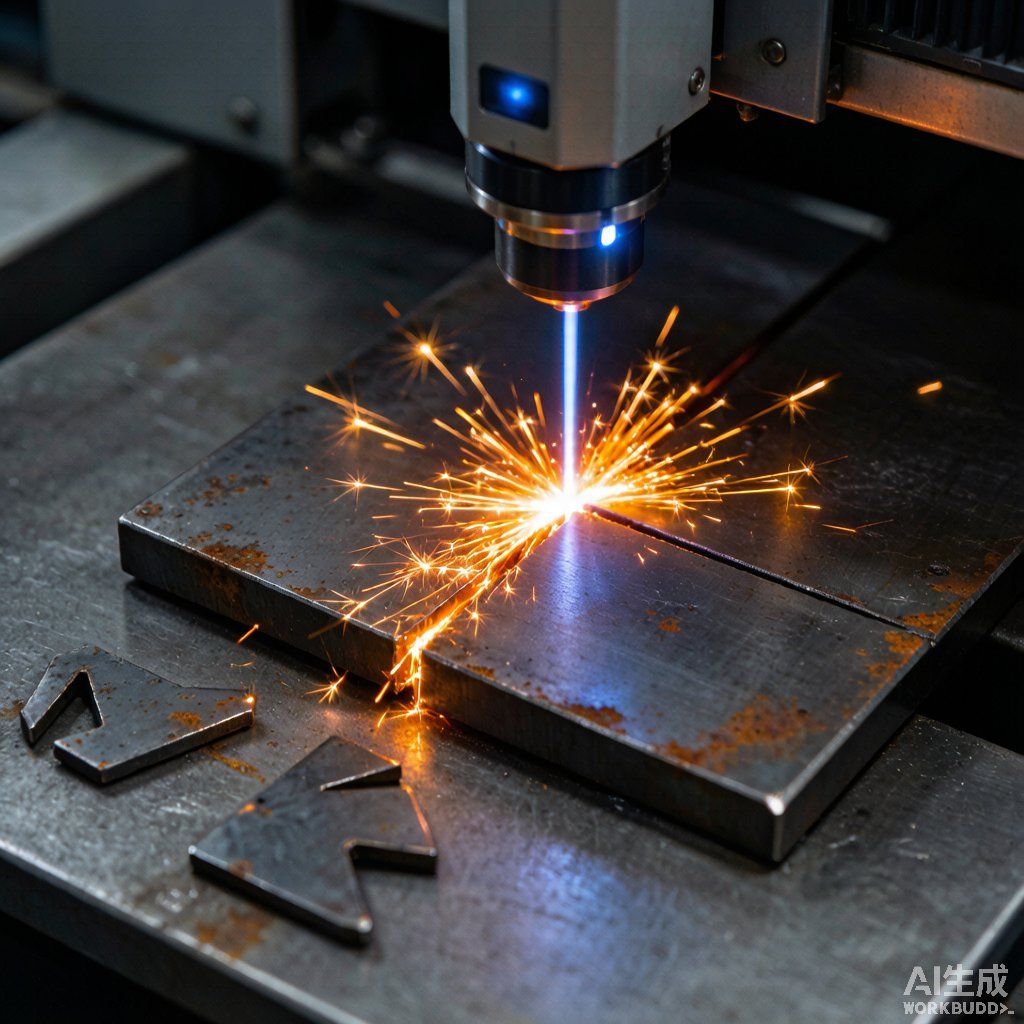
Carbon steel cutting with oxygen assist gas - the most common fiber laser application, representing 80% of all throughput.
Stainless Steel — Clean Cuts, Nitrogen Required
Stainless steel is the second most common fiber laser cutting material, and it demands different parameters from carbon steel. The key difference: use nitrogen (N2) as the assist gas. Oxygen creates a black, rough, chromium-oxide edge on stainless that is nearly impossible to weld or passivate without extensive grinding.
Cutting Parameters — Stainless Steel with Nitrogen
| Thickness (mm) | Power (W) | Speed (m/min) | N2 Pressure (bar) | Nozzle Diameter (mm) | Focus Position (mm) |
|---|---|---|---|---|---|
| 0.5 | 1000 | 25.0–35.0 | 12.0 | 1.0 S | -1.0 |
| 1.0 | 1500 | 15.0–22.0 | 14.0 | 1.2 S | -1.5 |
| 2.0 | 2000 | 8.0–12.0 | 16.0 | 1.5 S | -2.0 |
| 3.0 | 3000 | 5.0–7.0 | 18.0 | 1.5 S | -2.5 |
| 5.0 | 4000 | 2.5–3.5 | 20.0 | 2.0 D | -3.0 |
| 8.0 | 6000 | 1.5–2.2 | 22.0 | 2.5 D | -4.0 |
| 10.0 | 6000 | 1.0–1.5 | 22.0 | 2.5 D | -4.5 |
| 15.0 | 12000 | 0.7–1.1 | 22.0 | 3.0 D | -5.0 |
| 20.0 | 20000 | 0.5–0.8 | 24.0 | 3.0 D | -6.0 |
| 25.0 | 30000 | 0.3–0.6 | 24.0 | 4.0 D | -7.0 |
Focus position "-" means below the material surface — critical for stainless steel clean cuts with minimal dross.
Stainless steel cutting economics: Nitrogen consumption is the dominant operating cost for stainless cutting. At 20 bar and 2.5mm nozzle, a machine consumes approximately 45–55 Nm³/hr of nitrogen — costing $0.15–$0.25 per linear meter in gas alone. For shops cutting >2,000 hours of stainless steel per year, a nitrogen membrane generator with recovery loop ($25,000–$35,000) reduces per-meter gas cost to $0.03–$0.05 and pays back in 12–18 months.
Aluminum and Aluminum Alloys — The Reflectivity Challenge
Aluminum is the most technically challenging common metal for fiber laser cutting. Its high reflectivity at 1070nm (fiber laser wavelength) means a significant portion of the laser beam reflects back into the cutting head and can damage the laser source if not managed correctly. This is not a minor concern — back-reflection damage is the #1 cause of premature fiber laser source failure.
Aluminum Cutting Safety Rules (Non-Negotiable)
- Minimum power: 3000W. Never attempt to cut aluminum with <3000W. Lower power creates a higher percentage of back-reflection because the beam does not penetrate the material quickly enough to establish stable absorption.
- Use nitrogen assist gas only. Oxygen + aluminum = exothermic reaction that can burn through the material uncontrollably and destroy the cutting bed slats. Never use compressed air (21% oxygen).
- Back-reflection protection required. All RONGWIN machines ≥3000W include back-reflection isolators as standard. If buying a different brand, verify back-reflection protection is installed before cutting aluminum.
- Pierce at an angle. Unlike steel (vertical pierce), aluminum should be pierced at a 5–10° angle with the cutting head and then straightened for the cut line — this directs the initial reflected beam away from the nozzle.
Cutting Parameters — Aluminum Alloys (5000 & 6000 Series) with Nitrogen
| Thickness (mm) | Power (W) | Speed (m/min) | N2 Pressure (bar) | Nozzle (mm) |
|---|---|---|---|---|
| 1.0 | 3000 | 12.0–16.0 | 14.0 | 1.5 S |
| 2.0 | 3000 | 6.0–8.0 | 16.0 | 2.0 S |
| 3.0 | 4000 | 3.5–5.0 | 18.0 | 2.0 S |
| 5.0 | 6000 | 2.0–3.0 | 18.0 | 2.5 D |
| 8.0 | 6000 | 1.2–1.8 | 20.0 | 2.5 D |
| 10.0 | 12000 | 1.0–1.5 | 22.0 | 3.0 D |
| 12.0 | 12000 | 0.7–1.0 | 22.0 | 3.0 D |
| 16.0 | 20000 | 0.5–0.8 | 24.0 | 3.0 D |
| 20.0 | 30000 | 0.3–0.5 | 24.0 | 4.0 D |
Note on aluminum grades: 5000-series (Al-Mg) cuts more cleanly than 6000-series (Al-Mg-Si) due to lower silicon content, which reduces dross formation. 7000-series (Al-Zn, aerospace) is extremely difficult to cut with fiber laser and is generally better suited to waterjet.
Brass, Copper, and Highly Reflective Metals — Proceed with Extreme Caution
Brass and copper are the most reflective common metals at fiber laser wavelengths — copper reflects >95% of 1070nm laser energy. Cutting these materials without proper back-reflection protection will damage or destroy the laser source. That said, with the right setup, fiber lasers can cut brass and copper effectively — and the cut quality is superb because there is no oxidation or dross.
Requirements for Cutting Brass and Copper
- Minimum power: 4000W for brass, 6000W for copper. Higher power reduces the percentage of back-reflected energy by establishing stable absorption faster.
- Back-reflection isolator is mandatory. Not optional. The isolator must be rated for the laser source's maximum power.
- Nitrogen assist gas only. Oxygen + copper = uncontrolled oxidation and black, brittle cut edge.
- High-pressure piercing: Use 20+ bar nitrogen for piercing brass and copper to blast away the initial reflective molten pool before it can reflect back into the nozzle.
- Cut only flat, clean material: Surface oxidation, oil, or coating on copper and brass increases reflectivity unpredictably. Clean all material before cutting.
Cutting Parameters — Brass (CuZn37) with Nitrogen
| Thickness (mm) | Power (W) | Speed (m/min) | N2 Pressure (bar) |
|---|---|---|---|
| 1.0 | 4000 | 8.0–12.0 | 18.0 |
| 3.0 | 4000 | 3.0–4.5 | 20.0 |
| 5.0 | 6000 | 1.5–2.5 | 22.0 |
| 8.0 | 12000 | 1.0–1.5 | 24.0 |
Cutting Parameters — Pure Copper with Nitrogen
| Thickness (mm) | Power (W) | Speed (m/min) | N2 Pressure (bar) |
|---|---|---|---|
| 0.5 | 6000 | 6.0–8.0 | 20.0 |
| 1.0 | 6000 | 3.0–5.0 | 22.0 |
| 2.0 | 6000 | 1.5–2.5 | 22.0 |
| 3.0 | 12000 | 1.0–1.8 | 24.0 |
| 5.0 | 20000 | 0.5–1.0 | 24.0 |
Cost reality check: Cutting brass and copper on a fiber laser is possible but expensive — nitrogen consumption is 2–3x higher than stainless steel due to the higher pressure required, and cutting speeds are slow. For copper parts above 5mm thickness, waterjet or CNC milling is often more economical unless the fiber laser is already running other jobs and has spare capacity.
Titanium and Specialty Alloys — Medical, Aerospace, and High-Value Parts
Titanium cuts beautifully on fiber lasers with argon assist gas — arguably better than any other common metal. The cut edge is clean, oxide-free, and requires no post-processing for most aerospace and medical applications. The only challenge: titanium is expensive, so every scrap mistake costs real money.
Cutting Parameters — Titanium (Grade 2 & Grade 5/Ti-6Al-4V) with Argon
| Thickness (mm) | Power (W) | Speed (m/min) | Ar Pressure (bar) |
|---|---|---|---|
| 0.5 | 1000 | 15.0–25.0 | 12.0 |
| 1.0 | 1500 | 10.0–16.0 | 14.0 |
| 2.0 | 2000 | 6.0–9.0 | 16.0 |
| 3.0 | 3000 | 3.5–5.5 | 20.0 |
| 5.0 | 4000 | 2.0–3.0 | 22.0 |
| 8.0 | 6000 | 1.0–1.8 | 24.0 |
| 10.0 | 6000 | 0.6–1.0 | 24.0 |
Why argon for titanium? Argon is completely inert — it creates zero oxidation or nitriding on the cut edge. Nitrogen, while cheaper, can cause titanium nitriding (gold-colored edge discoloration) on Ti-6Al-4V at high temperatures, which is unacceptable for aerospace and medical implants. The argon cost premium ($0.30–$0.50 per linear meter) is negligible compared to the material value of titanium ($15–$40/kg for sheet).
Complete Material Compatibility Matrix for All Four RONGWIN Platforms
| Material | RWT-G Tube | CNC Plate & Pipe | Sealed Double-Table | Customizable CNC | Assist Gas | Min. Power |
|---|---|---|---|---|---|---|
| Carbon Steel | Excellent | Excellent | Excellent | Excellent | O2 / N2 | 1000W |
| Stainless Steel | Excellent | Excellent | Excellent | Excellent | N2 | 1500W |
| Aluminum | Good (3000W+) | Excellent | Excellent | Excellent | N2 | 3000W |
| Galvanized Steel | Excellent | Excellent | Excellent | Excellent | N2 | 1500W |
| Brass | Not Recommended | Good (4000W+) | Good (4000W+) | Good (4000W+) | N2 | 4000W |
| Copper | Not Recommended | Good (6000W+) | Good (6000W+) | Good (6000W+) | N2 | 6000W |
| Titanium | Good (1500W+) | Excellent | Excellent | Excellent | Ar | 1000W |
Assist Gas Selection Guide — The Performance/Quality/Cost Trade-Off
Assist gas is not an afterthought — it is the second-most-important parameter after laser power, and the wrong choice can double your per-part cost or ruin cut quality.
| Gas | Best for | Cost per m³ | Edge Quality | Cut Speed |
|---|---|---|---|---|
| Oxygen (O2) | Carbon steel ≥3mm | $0.15–$0.30 | Slightly oxidized (acceptable for most parts) | Fastest (exothermic boost) |
| Nitrogen (N2) | Stainless, aluminum, thin CS | $0.12–$0.25 | Clean, oxide-free | 25–35% slower than O2 on CS |
| Compressed Air | Thin CS ≤2mm (non-critical) | ~$0.01 | Oxidized + discolored edge | Similar to N2 |
| Argon (Ar) | Titanium, reactive alloys | $0.80–$1.50 | Perfect (completely inert) | Similar to N2 |
Cost optimization tip: For carbon steel ≤2mm where edge quality is not critical (parts that will be painted or hidden in assembly), compressed air can replace nitrogen and reduce gas cost by 90%+. The slightly discolored edge has zero impact on paint adhesion or structural properties.
Nozzle Selection — The Tiny Part That Controls Everything
The cutting nozzle is the cheapest consumable on a fiber laser ($5–$15 per nozzle) and the single most common cause of cut-quality problems. Selecting the right nozzle diameter and type for your material and thickness prevents dross, incomplete cuts, and excessive gas consumption.
Nozzle Type Guide
- Single-layer (S) nozzles: Best for thin sheet (≤3mm) and high-speed cutting. The simple conical design minimizes turbulence at the cut point. Use for: carbon steel ≤3mm with oxygen, stainless steel ≤2mm with nitrogen, aluminum ≤2mm.
- Double-layer (D) nozzles: Best for thick plate (≥5mm). The inner and outer gas channels create a laminar flow that clears molten material more effectively from deep kerfs. Use for: carbon steel ≥5mm, stainless steel ≥3mm, aluminum ≥3mm, any reflective metal.
- Nozzle diameter rule of thumb: Nozzle diameter (mm) ≈ material thickness (mm) ÷ 6, with a minimum of 1.0mm. Example: 12mm plate → 2.0mm nozzle. 1mm sheet → 1.0mm nozzle (minimum).
Nozzle maintenance: Replace the nozzle every 200–400 cutting hours (more frequently for aluminum due to spatter accumulation). A worn nozzle with an elliptical orifice (from spatter erosion) produces asymmetric gas flow and inconsistent cut quality — the most common "mystery quality problem" in fiber laser shops.
Common Material-Specific Cut Quality Problems and Solutions
Carbon Steel
- Problem: Heavy dross on bottom edge. Solution: Reduce cutting speed by 10–15%, or increase oxygen pressure by 0.2 bar, or replace worn nozzle.
- Problem: Cut edge has regular wavy pattern (striations). Solution: Reduce oxygen pressure slightly, or check that focus position is correct for material thickness.
- Problem: Incomplete cut (material does not separate). Solution: Increase power or reduce speed. If already at max power, the material is too thick for the laser source — upgrade to higher power or reduce assist gas pressure to slow the exothermic reaction.
Stainless Steel
- Problem: Brown/yellow edge discoloration. Solution: Increase nitrogen pressure to 20+ bar, or check nitrogen purity (must be ≥99.95%). Contaminated nitrogen (from a poorly maintained generator) is the #1 cause.
- Problem: Burr on bottom edge. Solution: Reduce cutting speed, or move focus position downward (more negative) by 1–2mm, or increase nitrogen pressure.
Aluminum
- Problem: Cut starts well but fails to penetrate mid-cut. Solution: The nozzle is likely collecting aluminum spatter and partially blocking the gas flow. Clean or replace nozzle and reduce pierce time to minimize initial spatter.
- Problem: Cut edge shows rough, granular surface. Solution: Aluminum grade may contain silicon (6000-series). Increase power by 20% or reduce speed by 25% — silicon increases melt viscosity, requiring more energy to clear the kerf.
Matching RONGWIN Fiber Laser Platforms to Your Material Mix
Different material mixes demand different machine configurations. Use this decision matrix to match your shop's material profile to the optimal RONGWIN platform:
- 80%+ carbon steel, all thicknesses: Any of the four platforms. Priority: power level (buy the highest you can justify).
- 50%+ stainless steel: Budget for nitrogen generation. The Sealed Double-Table platform maximizes ROI on nitrogen-dependent production by keeping the machine cutting continuously.
- 30%+ aluminum: Minimum 6000W power. The CNC Plate & Pipe or Sealed Double-Table platforms with back-reflection isolators.
- Any brass or copper: Minimum 6000W for copper. Maximum back-reflection protection. Consider whether the volume justifies the risk to the laser source — for <5% copper/brass, outsourcing is often more economical than risking a $160,000+ laser.
- Titanium or medical/aerospace alloys: Argon-capable gas system. The Customizable CNC platform allows specification of an argon gas manifold and high-purity regulator as factory options.
- Tube-dominant (70%+ tube): The RWT-G Tube Cutter — dedicated tube laser beats combo machine for tube productivity by 30–40%.
Conclusion: The Material Determines the Machine
Fiber laser cutting is a precision process, and precision starts with material knowledge. Carbon steel is forgiving; stainless steel demands clean nitrogen; aluminum requires power and back-reflection protection; brass and copper require caution and correct setup; titanium rewards the investment in argon with flawless cuts.
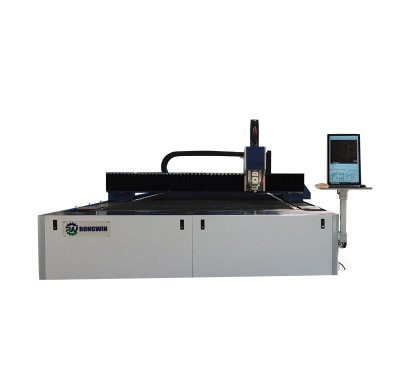
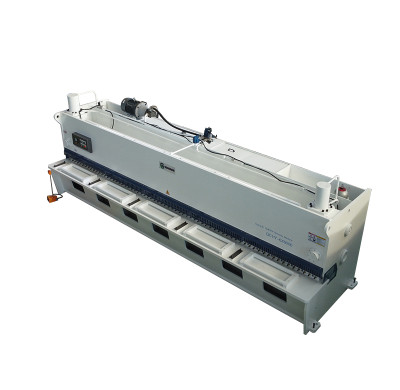
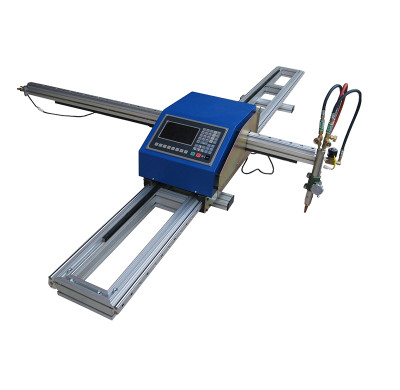
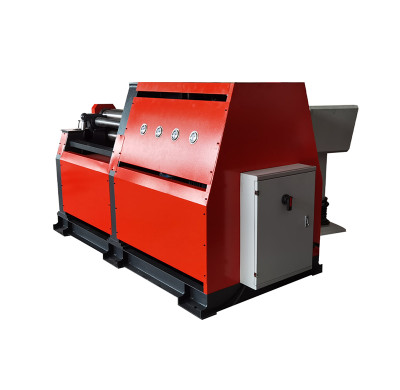
The four RONGWIN fiber laser platforms — RWT-G Automatic Tube Laser Cutter, CNC Plate and Pipe Fiber Laser Cutter, Sealed Double-Table Exchange Platform, and Customizable CNC Fiber Laser Cutter — cover every combination of material and workpiece geometry in industrial metal fabrication. Choose the platform that matches your material mix, spec the power level for your thickest material, and invest in the assist-gas infrastructure (nitrogen generator, argon manifold) that your primary materials demand. The right machine with the right parameters makes cutting profitable. The wrong parameter on the right machine makes scrap.
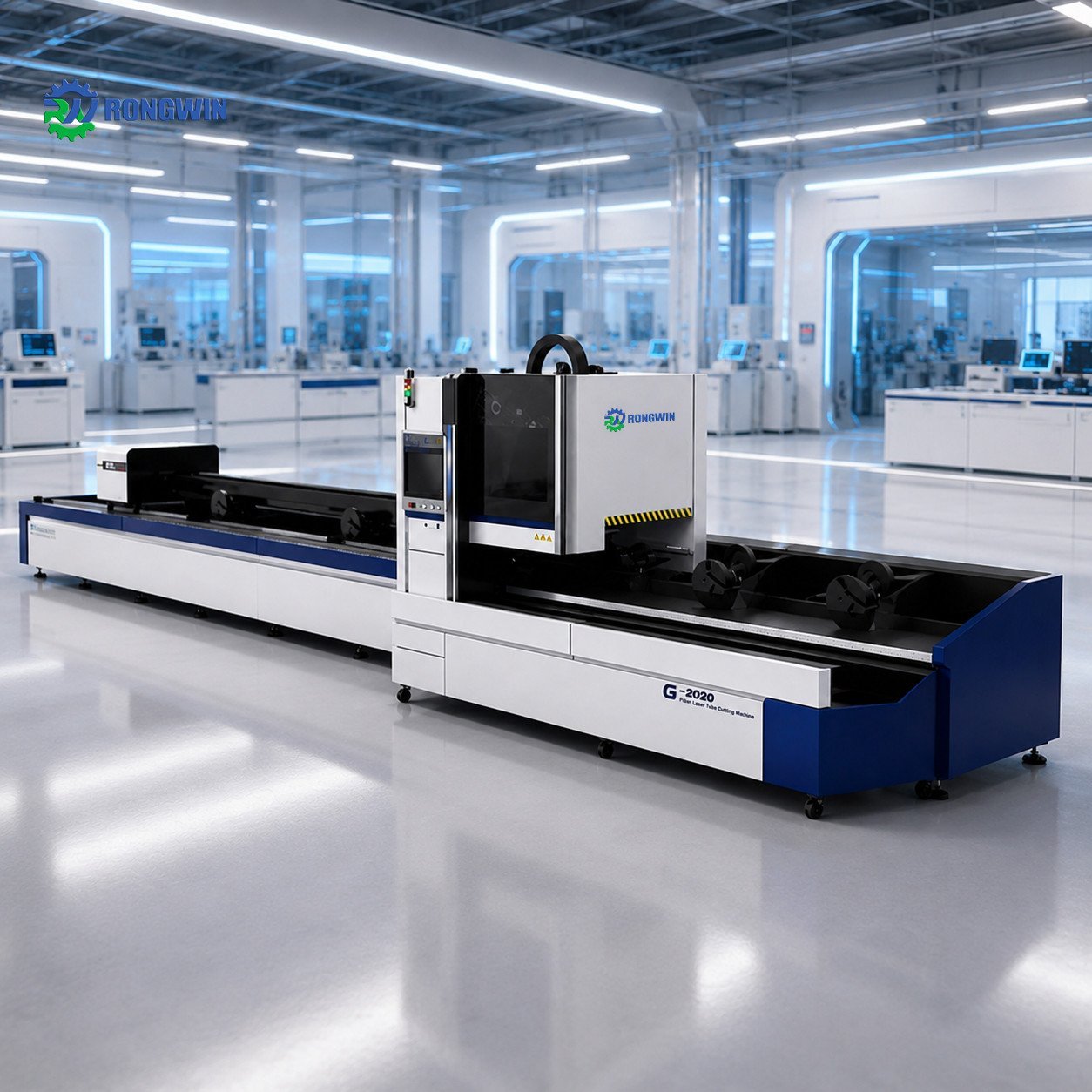
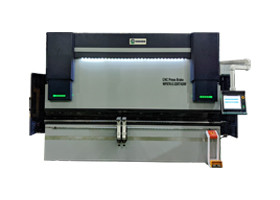
RWT-G Tube Cutter
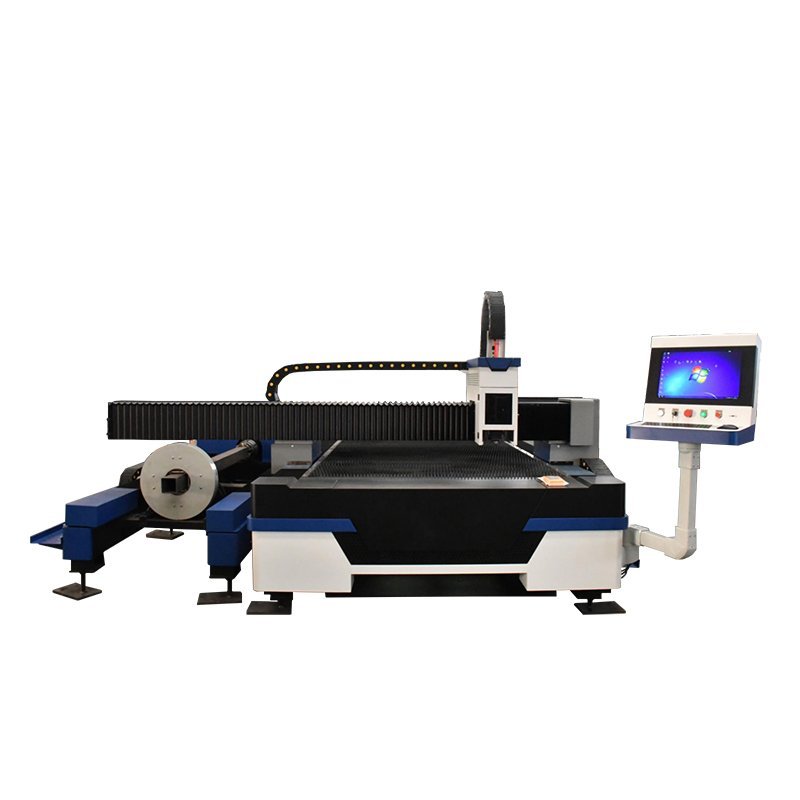
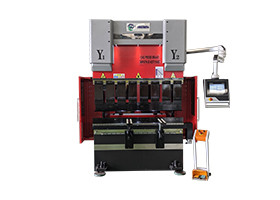
CNC Plate & Pipe
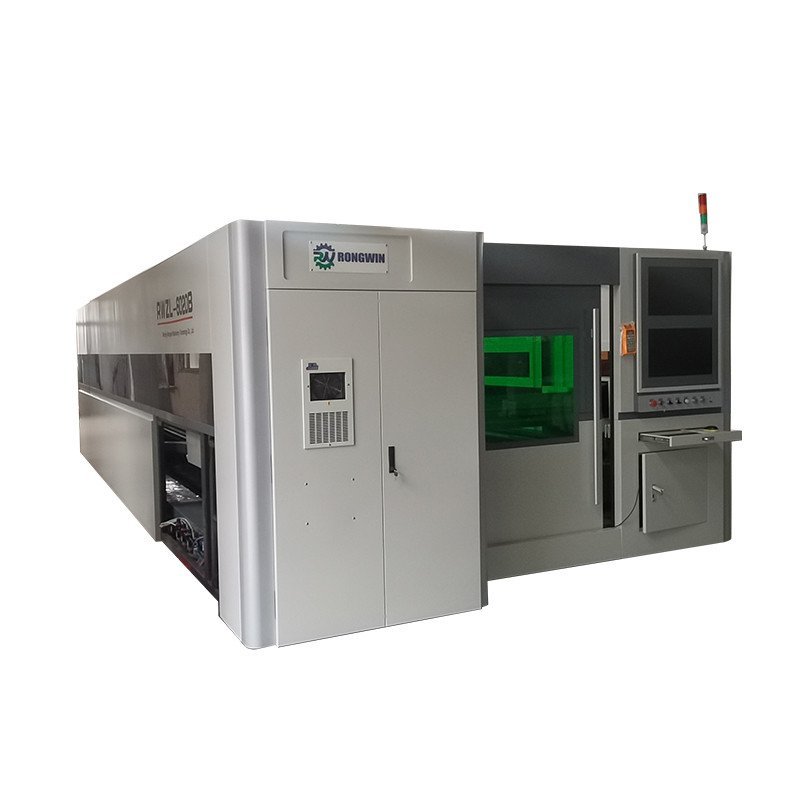
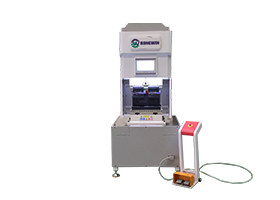
Sealed Double-Table
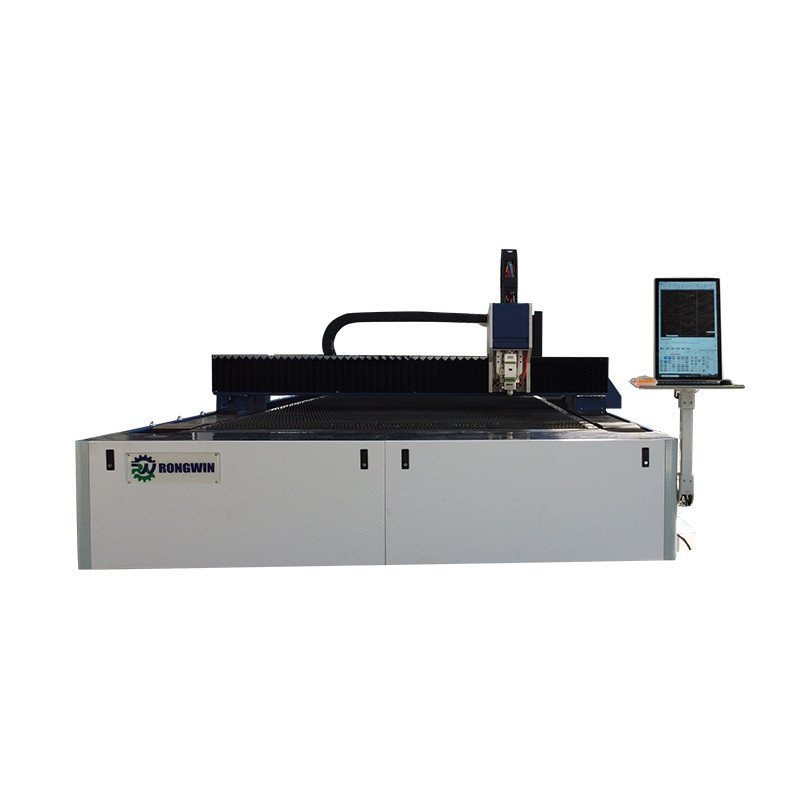
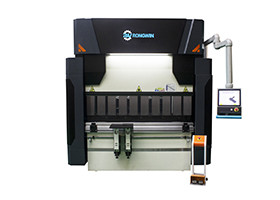
Customizable CNC