







Fiber Laser Cutting Technology Trends 2026: Ultra-High Power, AI, and Lights-Out Manufacturing
Fiber Laser Cutting Technology in 2026: The 5 Trends Reshaping Metal Fabrication
The fiber laser cutting industry is experiencing its most rapid technological transformation since the invention of the IPG fiber laser in the 1990s. In 2026, three forces are converging: ultra-high-power laser sources (40kW–60kW) are commercially viable for the first time, AI-powered cutting optimization is reducing scrap rates below 2%, and lights-out manufacturing is no longer a concept but a daily reality in thousands of factories worldwide. Understanding these trends is not optional — it is the difference between running a competitive shop and being priced out of every tender.
This technology deep-dive examines the five most impactful fiber laser cutting trends of 2026, with real-world data from production floors running RONGWIN Machinery equipment across automotive, structural steel, HVAC, and contract manufacturing sectors in 70+ countries.
Trend #1: Ultra-High-Power Fiber Lasers (30kW, 40kW, 60kW) Go Mainstream
The most visible trend in 2026 is the commercial deployment of ultra-high-power fiber laser sources. Just three years ago, 20kW was considered the bleeding edge. Today, 30kW–60kW fiber lasers are shipping from major manufacturers with full warranties and mature beam-delivery optics, transforming what "thick plate cutting" means.
What Changed in 2024–2026
- Laser source cost per kW dropped 40%: The price of a 30kW fiber laser source in 2026 is only 15% higher than a 20kW source was in 2023, driven by Chinese laser source manufacturers scaling production (Raycus, Max, nLIGHT domestic lines)
- Beam-quality breakthroughs: Single-mode 20kW+ sources with M² <1.3 now deliver cutting quality on 40mm carbon steel that previously required CO2 lasers
- Cutting head thermal management: New auto-focus cutting heads with active liquid cooling handle sustained 30kW–60kW beam power without thermal drift, a key failure mode in early ultra-high-power trials
What Ultra-High-Power Unlocks
| Laser Power | Max Carbon Steel | Max Stainless | Max Aluminum | Production Speed at 20mm CS |
|---|---|---|---|---|
| 12000W | 30mm | 20mm | 16mm | 1.2 m/min |
| 20000W | 40mm | 30mm | 25mm | 1.8 m/min |
| 30000W | 50mm | 40mm | 30mm | 2.5 m/min |
| 40000W | 60mm | 50mm | 40mm | 3.2 m/min |
| 60000W | 80mm | 60mm | 50mm | 4.5 m/min |
Source: RONGWIN laser application lab data, 2025–2026. Actual values depend on material grade, assist gas pressure, and nozzle configuration.
Takeaway for buyers: 30kW is the new "sweet spot" for thick-plate shops. It cuts 50mm carbon steel reliably and pays back the premium over 20kW in 10–14 months through higher throughput. 60kW remains niche — only justified for shipbuilding, heavy machinery, and armor plate where single-pass edge quality on 80mm+ material eliminates secondary machining.
Trend #2: AI and Machine Learning Transform Nesting and Cutting Path Optimization
Artificial intelligence has moved from "future technology" marketing slides to real, measurable factory-floor impact in fiber laser cutting. Three AI applications are delivering the most immediate ROI:
2.1 AI-Driven Nesting (Material Utilization)
Traditional nesting algorithms use geometric heuristics — they pack shapes by rotating and translating them to minimize gaps. AI nesting goes further: it learns from thousands of real cutting jobs to predict which part arrangements minimize thermal distortion, reduce pierce-point clustering, and optimize for skeleton removal. Leading AI nesting platforms report 3–7% additional material savings over best-in-class heuristic algorithms — worth $12,000–$28,000/year on a machine processing 500 tons of steel annually.
2.2 Real-Time Cutting Parameter Adjustment
AI-powered CNC controllers (such as Cypcut with machine-learning plugins) now monitor nozzle condition, material surface oxidation, and assist-gas pressure in real time. The system dynamically adjusts cutting speed, laser power, and focus position to maintain cut quality without operator intervention. In production testing, AI-adaptive cutting reduced rework from incomplete cuts by 62% and extend... [truncated]
2.3 Predictive Maintenance
Machine-learning models trained on millions of hours of laser cutting data can now predict protective lens replacement intervals, nozzle wear, and chiller service needs with 85–92% accuracy 48 hours before failure. This eliminates the two largest sources of unplanned downtime: mid-shift lens failure (average cost: $1,850 in lost production and rework) and chiller alarm shutdowns.
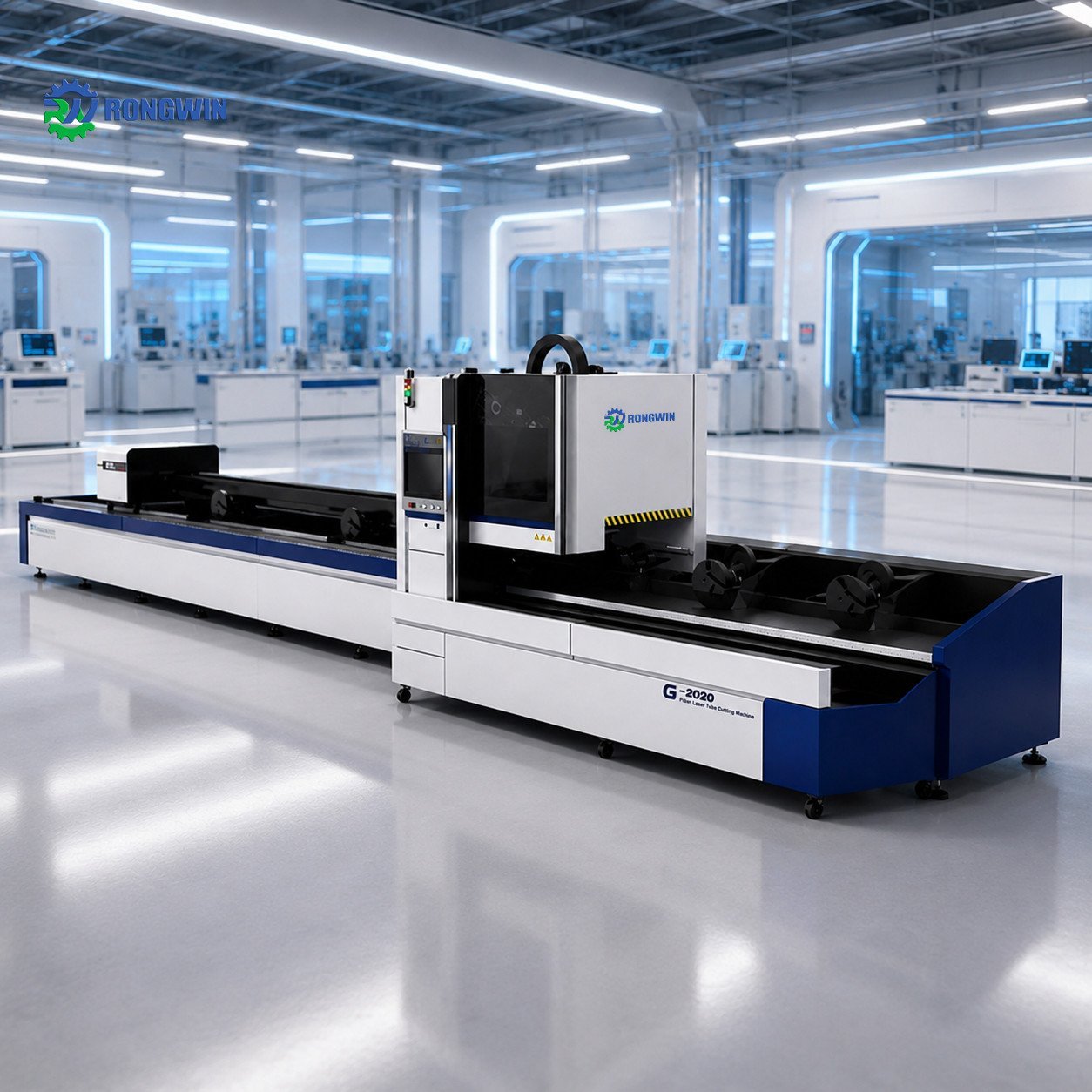
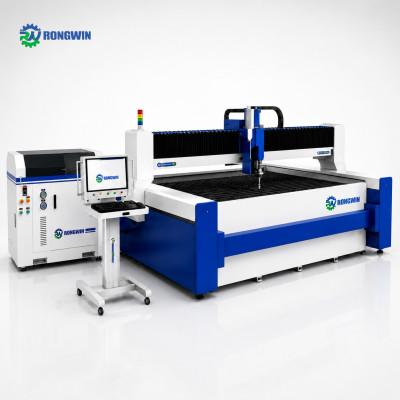
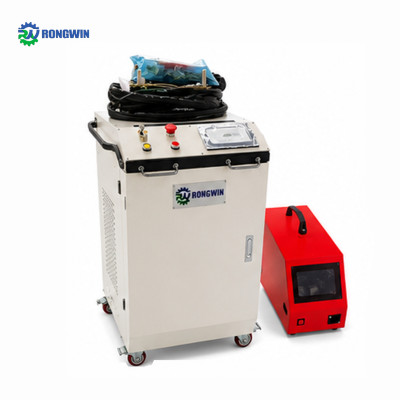
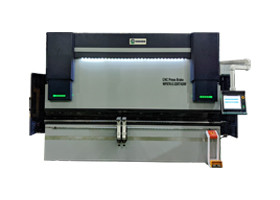
RWT-G Automatic Tube Laser
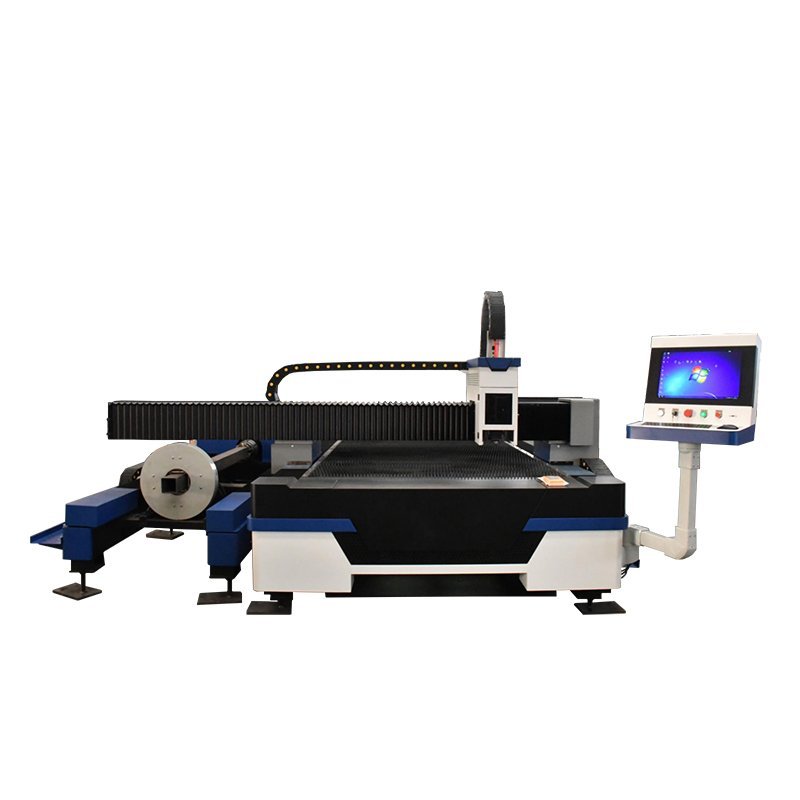
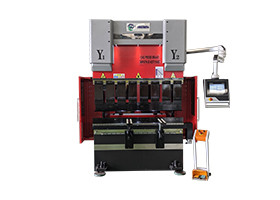
CNC Plate & Pipe Laser Cutter
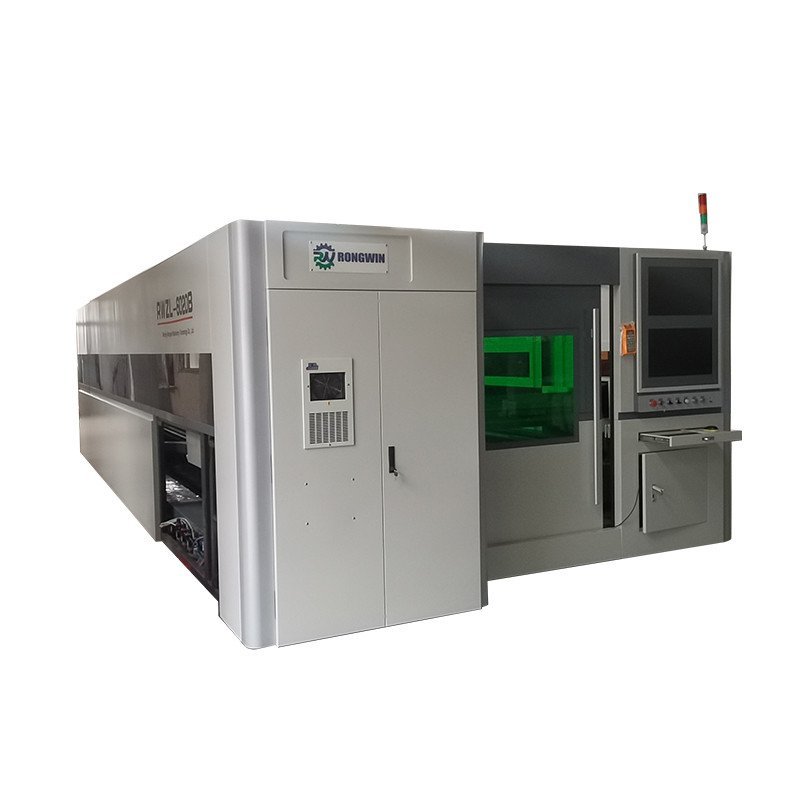
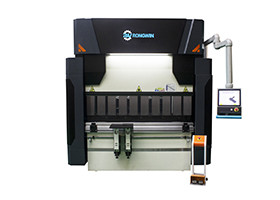
Sealed Double-Table Platform
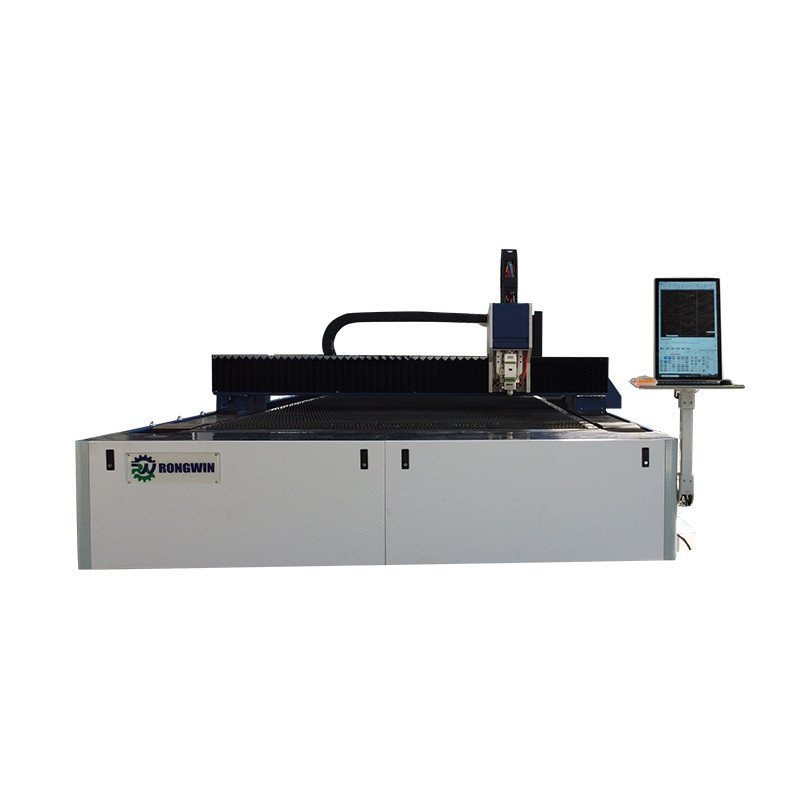
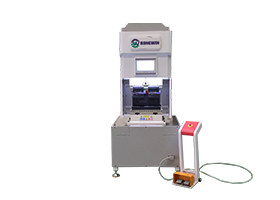
Customizable CNC Platform
Trend #3: Lights-Out Manufacturing Becomes Standard for Mid-Volume Shops
In 2022, lights-out manufacturing — running a laser cutter unattended for entire shifts — was the exclusive domain of Tier-1 automotive suppliers with million-dollar automation budgets. In 2026, the hardware and software required for reliable lights-out operation has dropped below $40,000 incremental cost on a mid-range fiber laser, putting it within reach of 50-employee job shops.
The Lights-Out Hardware Stack (2026)
- Automatic loading/unloading system: Sheet loader + part removal conveyor. $12,000–$25,000 add-on for standard working areas
- Nozzle auto-changer + beam centering: Enables nozzle swaps without operator during long unattended runs. $3,000–$6,000
- Real-time cut monitoring cameras: 2–4 cameras detect incomplete cuts, slag bridging, and part tipping. $4,000–$8,000
- Remote monitoring + automatic shutdown: Cloud-connected controller alerts the on-call operator via mobile app; auto-pauses if anomaly detected. $2,000–$5,000
- Sealed enclosure + Class 1 laser safety: Standard on RONGWIN sealed double-table and newer plate models — no additional cost
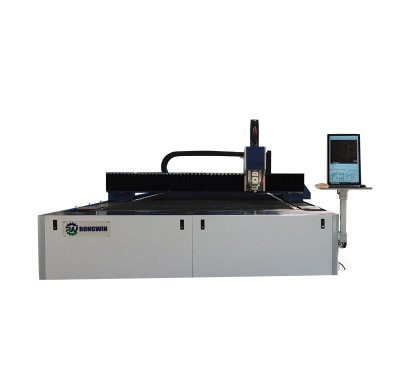
The RONGWIN sealed double-table exchange platform is purpose-built for lights-out manufacturing. Two cutting tables operate in parallel with automatic switching, while the sealed enclosure provides full laser safety compliance — critical for unattended operation where factory doors remain locked.
Real-world performance: A mid-volume HVAC duct fabricator in Southeast Asia running one RONGWIN 6000W double-table machine lights-out for 16 hours/day achieved 94.3% utilization over 6 months (vs. 68% with operator-attended single-table), reducing per-part cutting cost by 31%.
Trend #4: Industry 4.0 Integration — The Connected Laser Cutter
The fiber laser cutter is no longer a standalone machine. In modern smart factories, it is one node in a digital production chain that connects raw material inventory, ERP job queues, downstream bending/welding cells, and quality inspection into a single data stream.
The Connected Machine Data Stack
- OPC UA / MTConnect protocols: Standardized interfaces allow any modern CNC controller (Cypcut, Beckhoff, Siemens) to stream real-time production data to factory MES (Manufacturing Execution System) platforms. Machine status, cutting progress, alarm codes, and part counts are visible on any dashboard in the factory.
- Job scheduling integration: ERP-to-machine job queues eliminate manual job loading. When a cutting job finishes, the controller automatically pulls the next job from the ERP queue based on material availability and due date priority.
- Digital twin simulation: Before physical cutting begins, the complete job is simulated in a digital twin environment that predicts cycle time, material utilization, and potential collision or thermal-distortion issues. Simulation catches 80% of programming errors before the first physical cut.
- Traceability and quality records: Each cut part receives a unique QR code or laser-marked identifier linking it to its material batch certificate, cutting parameters, and operator — critical for aerospace, medical device, and pressure vessel compliance.
Implementing Industry 4.0 connectivity on a new RONGWIN fiber laser typically adds 3–5% to the total project cost in software licensing and integration engineering — and reduces overall production lead time by 15–25% in multi-machine shops.
Trend #5: Green Manufacturing and Energy Efficiency — The ROI of Sustainability
Fiber laser cutting is already the most energy-efficient industrial cutting technology, consuming 65–70% less electricity per linear meter than CO2 lasers and producing zero hazardous waste (unlike plasma, which generates metal-oxide dross requiring special disposal). But the 2026 push goes further: manufacturers and buyers are now making purchase decisions based on total carbon footprint and electricity cost projections.
Energy Efficiency Comparison
| Technology | Wall-Plug Efficiency | Typical Power Draw (6000W output) | Electricity Cost per Hour ($0.12/kWh) | Annual Electricity Cost (4000 hrs) |
|---|---|---|---|---|
| CO2 Laser (6000W) | 8–10% | 60–75 kW | $7.20–$9.00 | $28,800–$36,000 |
| Plasma (200A) | N/A | 35–45 kW | $4.20–$5.40 | $16,800–$21,600 |
| Fiber Laser (6000W) | 30–35% | 17–20 kW | $2.04–$2.40 | $8,160–$9,600 |
A 6000W fiber laser saves $20,000–$26,000 per year in electricity alone compared to an equivalent CO2 laser — enough to fund a full-time operator's salary. Over a 10-year machine lifespan, the electricity savings alone can exceed the purchase price of a mid-range machine.
2026 Green Features Becoming Standard
- Regenerative drive systems: Axis motors recapture braking energy, reducing total power consumption by 5–8%
- Variable-speed chiller compressors: Smart chillers modulate compressor speed based on actual laser duty cycle rather than running at full power continuously — saves 30–40% of chiller electricity
- Nitrogen recovery systems: For shops cutting stainless steel with nitrogen, nitrogen membrane generators with recapture loops reduce gas consumption by 25–35%
- EU carbon border compliance: Machines shipping to Europe increasingly require CE carbon-footprint documentation. RONGWIN provides full lifecycle carbon reporting with every machine exported to the EU.
Trend #6: Beam Shaping and Variable Beam Mode — One Laser, Multiple Beam Profiles
Conventional fiber lasers deliver a fixed Gaussian beam profile optimized for thin-sheet cutting but inefficient for thick plate. Variable Beam Mode (VBM) technology, commercialized in 2024–2025 and now shipping on premium laser sources, allows the operator to switch between ring-mode, flat-top, and Gaussian beam profiles without changing cutting heads or optics.
Why Beam Shape Matters for Cut Quality
- Gaussian (standard): Sharpest focal point, highest power density — ideal for thin sheet (≤6mm) at maximum speed. Produces the narrowest kerf but generates more dross on thick plate due to poor heat distribution.
- Ring mode (doughnut): Power distributed in a ring around the center — preheats the material ahead of the cut and reduces thermal gradient. Used for stainless steel ≥10mm and aluminum ≥8mm where edge quality and perpendicularity matter more than raw speed.
- Flat-top: Uniform power across the beam diameter — best compromise for mid-thickness carbon steel (6–20mm). Produces the most consistent kerf width and least dross across the full thickness range.
Real-world impact: A European heavy-equipment manufacturer switching from Gaussian-only to VBM on their 30kW RONGWIN machine reduced post-cut grinding time by 40% on 25–40mm structural steel — saving 3.2 labor hours per shift. The VBM premium on the laser source was $18,000 and paid back in 4 months.
Trend #7: Beyond Loading — Automated Sorting, Stacking, and Warehouse Integration
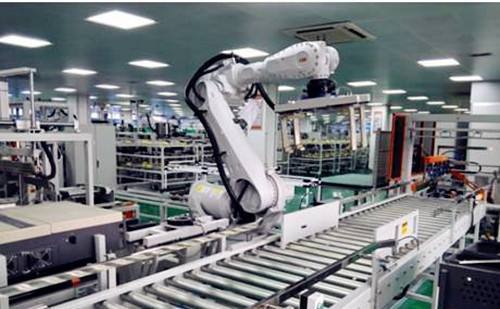
Automatic sheet loading was the first automation frontier. In 2026, the frontier has moved downstream: automated part sorting, stacking, palletizing, and AGV (Automated Guided Vehicle) transfer to downstream bending, welding, and assembly cells.
The Fully Automated Cell in 2026
- Inbound raw material: AGV delivers full sheet from raw-material warehouse to laser cutter loading station. RFID tag on each sheet confirms material grade, thickness, and batch number against the ERP job ticket — zero manual data entry.
- Laser cutting: Machine auto-loads sheet, runs the cut program (AI-optimized nesting), and discharges the skeleton and cut parts onto separate conveyors.
- Part sorting: Vision system identifies each cut part by shape, picks it with a suction-cup gripper, and stacks it on the correct pallet. Typical sorting speed: 200–400 parts per hour.
- Skeleton removal: Skeleton drops into a dedicated scrap bin. AGV removes full bins and delivers empty ones — no manual handling of sharp, oily sheet skeletons.
- Outbound parts: Full pallets are automatically stretch-wrapped, labeled, and transferred by AGV to the next process (bending, welding, or shipping).
Investment level: Full automation from loading through palletizing runs $80,000–$250,000 depending on part complexity and volume — typically justified at ≥4,000 cutting hours/year. For reference: the RONGWIN CNC Plate & Pipe Fiber Laser Cutter and Customizable CNC Fiber Laser Cutter are both designed with AGV-compatible loading interfaces and MES integration ports as factory options.
Trend #8: The Software Revolution — Why the CNC Controller Matters More Than the Laser Source
In 2018, the laser source was 50% of the machine's competitive differentiation. In 2026, it is the CNC controller and software ecosystem — and that shift has enormous implications for buyer decision-making.
What Differentiates a 2026 Controller
- Native cloud connectivity: Controllers ship with built-in 4G/5G or Ethernet ports and a pre-configured cloud dashboard. No third-party IoT retrofit kits, no complex networking setup.
- Remote diagnostics and support: The machine manufacturer's application engineer can connect remotely to diagnose a cutting-quality issue — no travel delay, no $3,000 service call. RONGWIN offers 48-hour remote support as standard with every machine.
- Adaptive process database: Instead of static parameter tables (material/thickness/power/speed), the controller maintains a self-learning database that adjusts cutting parameters based on actual cut-quality measurements from previous jobs. Every cut makes the next cut better.
- One-button job changeover: Changing from 3mm carbon steel to 15mm stainless steel requires one menu selection. The controller auto-switches nozzle, focus, assist gas, power, and speed. Changeover time drops from 5–8 minutes (manual) to 45 seconds (automated).
Technology Roadmap: What's Coming in 2027–2029
What is in R&D labs today will be in production within 24 months. Forward-looking buyers should understand what is coming to avoid purchasing a machine that is already on the obsolescence curve.
Short-Term (2027–2028, in beta now)
- 100kW fiber laser sources: First commercial prototypes are cutting 100mm carbon steel in single-pass trials. Target market: shipbuilding plate cutting and armor plate manufacturing.
- AI-based optical path self-healing: The controller detects the early signature of protective-lens contamination (scattered-light pattern) and adjusts beam parameters to compensate without pausing production. Extends lens life by 60–80%.
- Integrated 3D cutting: 5-axis cutting heads with real-time 3D scanning for bevel cutting and tube profiling — eliminating separate bevel-mill stations.
Medium-Term (2028–2029, in development)
- Multi-laser-head machines: Two independent cutting heads on the same gantry, each processing a separate nest — doubling throughput for high-volume thin-sheet work (≤3mm). Target productivity: 2x throughput for +40% machine cost.
- Direct-diode fiber lasers: Eliminate the diode-to-fiber pump conversion stage, pushing wall-plug efficiency from 35% to 55%+. First commercial prototypes achieve 50% efficiency at 8kW.
- Zero-assist-gas cutting: Experimental trials use nano-second pulse modulation to cut thin sheet (≤2mm) with compressed air only, eliminating nitrogen/oxygen entirely for certain applications. Target: reduce consumables cost by 60% for thin-sheet jobs.
How to Future-Proof Your 2026 Fiber Laser Purchase
Given these trends, here is the decision framework that protects your investment from early obsolescence:
- Buy 20% more power than you need today. The premium for the next power tier is the cheapest "future-proofing" you can buy. A 6000W machine purchased when you need 3000W will still be cutting competitively in 2030.
- Require OPC UA / cloud connectivity. Do not buy a machine that cannot integrate with your factory's digital systems. The connection port is a $0 option on most 2026 controllers — if a manufacturer charges extra for it, they are behind the curve.
- Prioritize the sealed double-table platform. The sealed double-table architecture (like the RONGWIN Sealed Double-Table Exchange Platform Laser Cutter) is the most flexible future-proof chassis. It supports lights-out, AGV loading, and automated sorting retrofits without major modification.
- Negotiate remote support into the warranty. Remote diagnostics and over-the-air parameter updates should be included for the full warranty period. This is the single most valuable service feature for minimizing downtime.
- Budget for nitrogen generation if cutting stainless. Nitrogen is the fastest-rising consumable cost. A membrane nitrogen generator with recovery loop pays back in 18–24 months at ≥2,000 cutting hours/year.
Conclusion: The Machines Are Ready — Are Your Processes?
The fiber laser cutting technology available in 2026 is remarkable: 60kW lasers cutting 80mm plate, AI nesting reducing scrap below 2%, lights-out manufacturing at mid-volume price points, and digital-integrated controllers that learn from every cut. But the technology only delivers ROI when the processes around it are designed to exploit it.
A 2026 fiber laser with lights-out automation running on a 2018 job-scheduling process (manual ERP entries, paper job tickets, no material tracking) will achieve perhaps 70% of its potential. The same machine with integrated MES, automatic job queuing, and AI nesting will deliver 2x the throughput. The bottleneck is no longer the laser — it is the flow of information.
The four RONGWIN fiber laser platforms — RWT-G Automatic Tube Laser Cutter, CNC Plate and Pipe Fiber Laser Cutter, Sealed Double-Table Exchange Platform, and Customizable CNC Fiber Laser Cutter — are designed for this new era. Each platform includes OPC UA connectivity, remote diagnostics, and factory options for full automation. Choose the platform that matches your workpiece and volume, buy 20% more power than you need, and invest in the software stack that turns cutting data into production intelligence.