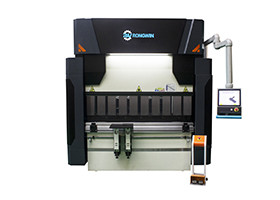
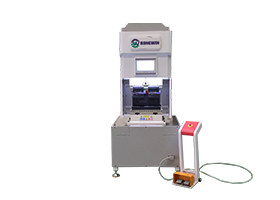
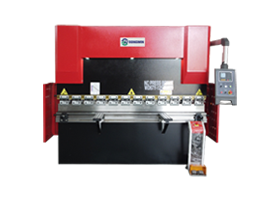
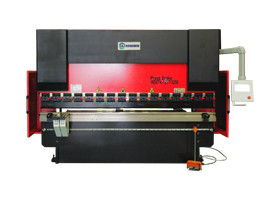
Introduction: Why "Buying the Right Equipment" Doesn't Guarantee Maximum Profitability
As global manufacturing accelerates toward flexible, digital production, the sheet metal fabrication industry is undergoing a silent but profound reshuffle. Many purchasing managers and plant supervisors fall into a common trap when upgrading equipment: assuming that simply installing a high-power fiber laser cutter or a multi-axis CNC press brake will automatically drive capacity and profit growth. Reality often tells a different story. After installation, shops frequently face rough cut edges, uncontrolled bending springback, inefficient loading/unloading, constant machine downtime for operator adjustments, and maintenance costs that far exceed budgets. These "hidden losses" are quietly eroding profit margins that should belong to the enterprise.
According to joint research by the European Metalforming Association (CEMT) and the Society of Manufacturing Engineers (SME), over 68% of mid-sized sheet metal shops fail to achieve their targeted ROI within the first 12 months of equipment investment. The core issue is rarely insufficient machine performance. Instead, it stems from unoptimized process parameters, disconnected workflows, mismatched operator skill sets, and the absence of structured maintenance systems. True competitiveness lies not in the peak specifications of a single machine, but in full-chain precision control and efficiency management—from laser cutting and CNC bending to quality inspection and warehousing.
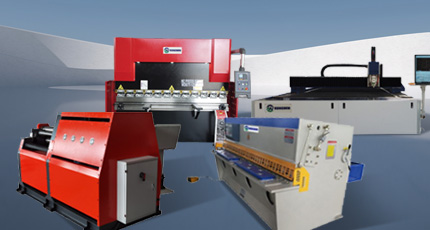
Based on rongwin Machinery's field research and equipment deployment across 300+ sheet metal workshops worldwide, this article systematically breaks down the core pain points in modern fabrication. It provides actionable equipment selection guidelines, process optimization strategies, and automation integration pathways. Whether you are a plant manager planning a new production line, an engineering supervisor overseeing procurement, or a frontline technician seeking process breakthroughs, this guide delivers a battle-tested "Precision × Efficiency × Cost" optimization framework.
I. The "Hidden Bottlenecks" in Modern Sheet Metal Shops: Why Did Profits Lag Behind Equipment Upgrades?
During visits to fabrication facilities across North America, Europe, and Southeast Asia, we consistently hear three recurring complaints: "Machines cost more, but scrap rates won't drop," "When veteran operators retire, newcomers can't hit the angle," and "Orders are increasingly fragmented; changeover time now exceeds actual processing time." Behind these statements lie four structural bottlenecks:
1.1 Precision Fluctuations: The Uncontrolled Chain from Material Micro-Characteristics to Equipment Dynamic Response
Sheet metal fabrication is fundamentally a combined process of plastic deformation and thermodynamics. Many facilities overlook critical variables such as:
Material Batch Variability: Steel of the same grade (e.g., Q235, 304 stainless) can exhibit ±15% yield strength fluctuations due to differences in smelting processes and rolling directions, directly causing bending springback variations of 3°~5°.
Laser Cutting Heat-Affected Zone (HAZ): Unoptimized cutting parameters create micro-cracks and residual stresses along the cut edge. During bending, these areas become stress concentration points, leading to edge cracking or angle deviation.
Press Brake Deflection Compensation Failure: Traditional mechanical press brakes processing long workpieces (>2m) experience ram deflection of 0.3~0.5mm at the center. Without dynamic deflection compensation, this inevitably results in a "smile-shaped" deviation: over-bent center and under-bent ends.
1.2 The Efficiency Trap: Compounding Effects of Changeover Time, Manual Intervention, and Wait Times
SMED (Single-Minute Exchange of Die) principles remain underutilized in the sheet metal sector. Statistics show that in high-mix, low-volume production, a standard CNC press brake's actual bending time accounts for only 38%~42% of available runtime. The remaining time is consumed by:
Tool searching, installation, and alignment (avg. 12~25 min/change)
First-piece test bending, angle measurement, and parameter fine-tuning (avg. 8~15 min/batch)
Manual handling, part flipping, and positioning (consumes >60% of operator physical capacity)
WIP (Work-in-Progress) accumulation and waiting between cutting and bending stations
1.3 Skills Gap: Reliance on "Experience & Intuition" Fails in the Era of Digital Orders
Traditional fabrication heavily relies on veteran operators' "feel" and "visual estimation." However, as order structures shift toward EV structural components, medical device enclosures, and energy storage cabinets featuring high-value, thin-walled, and complex geometries, empirical tuning can no longer meet ±0.5° angle tolerances and ±0.2mm dimensional accuracy. Enterprises urgently need to convert "tacit knowledge" into "explicit parameter databases."
1.4 Hidden Costs: Deferred Maintenance, Spare Parts Shortages, and Energy Consumption Black Holes
If a laser cutter's focusing lenses aren't replaced on schedule, rails aren't cleaned, and optical paths aren't calibrated, output power can degrade by over 20% without triggering immediate alarms. Similarly, if a press brake's hydraulic system isn't regularly filtered or monitored for oil temperature, seal aging causes pressure leakage, manifesting as insufficient bending force or ram crawling. These "chronic losses" are typically noticed only after catastrophic failure, causing maintenance costs and downtime losses to scale exponentially.
💡 Core Insight: Equipment is merely the vessel; process is the soul; systems are the framework; and talent is the brain. True competitiveness lies in transforming "single-machine performance" into "production line synergy," converting "manual experience" into "data assets," and upgrading "reactive maintenance" to "predictive maintenance."
II. Laser Cutter Selection & Process Optimization: It's Not Just About "Cutting Fast," But "Cutting Well"
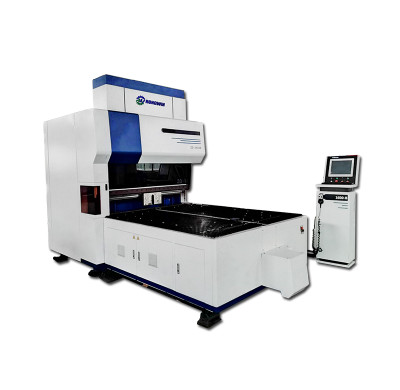
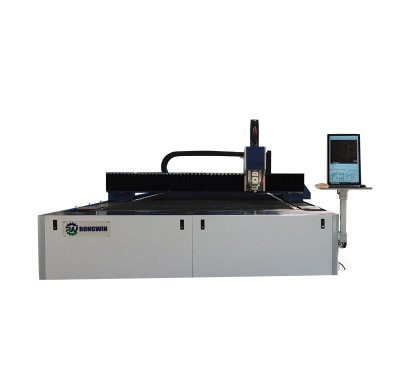
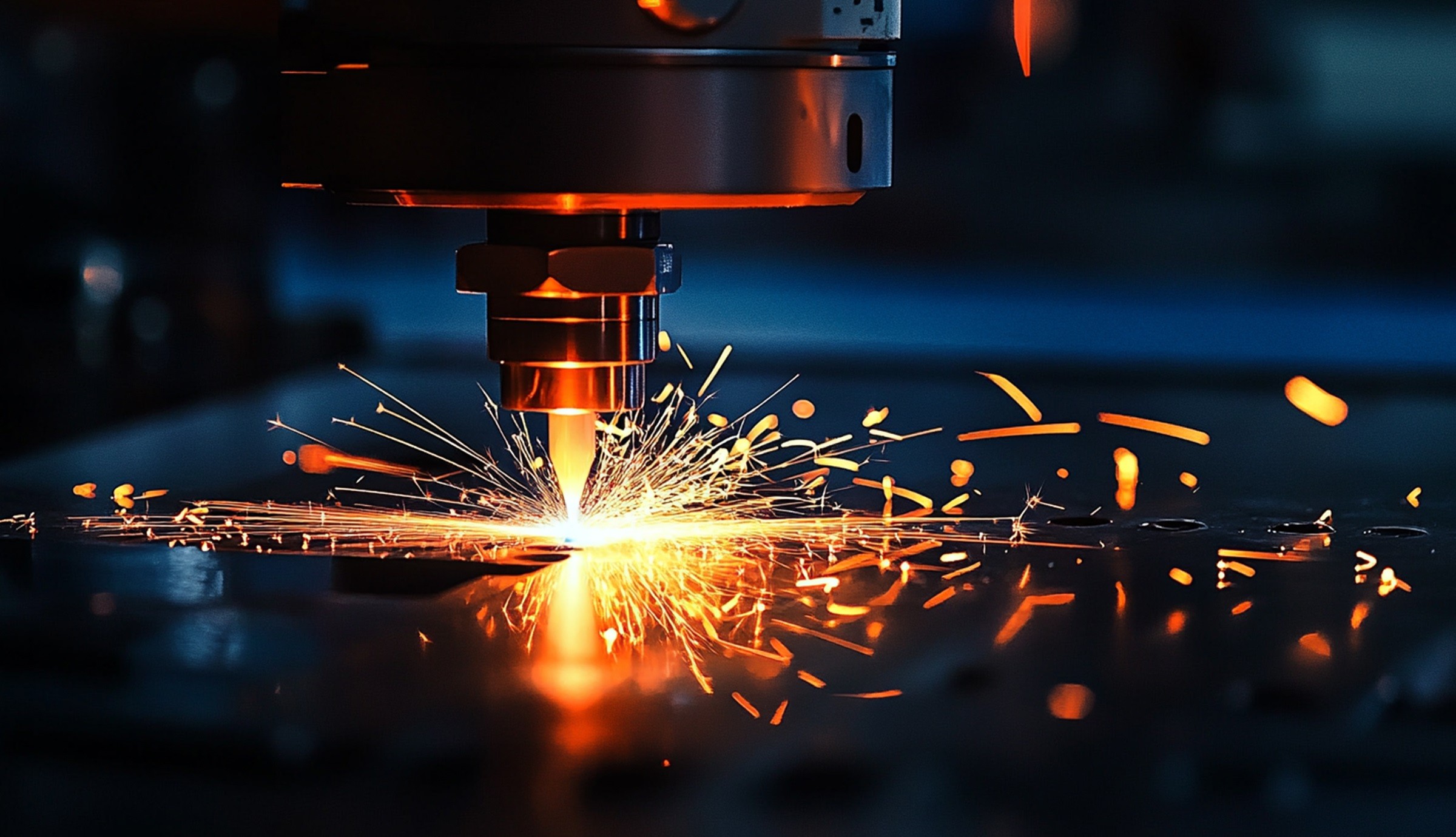
Fiber laser cutters have become standard equipment in sheet metal fabrication. However, the power race from 3kW to 30kW has not automatically resolved all cutting quality issues. The core of selection and process optimization lies in matching material characteristics, cutting objectives, and long-term operational costs.
2.1 Power Selection: Not "Higher is Better," But "Sufficient + Strategic Buffer"
Common Thickness Range
Recommended Laser Power
Cutting Speed Reference (Carbon Steel, mm/min)
Edge Quality Key Control Points
≤3mm
1~3kW
15,000~30,000
Focal position, assist gas pressure, piercing mode
Warning Against Misconceptions: Blindly pursuing higher power leads to surging capital expenditure, skyrocketing electricity bills, and accelerated optical component wear. For shops primarily processing 3~10mm plates, 6~12kW typically offers the optimal ROI. rongwin Machinery frequently implements "modular power upgrade" solutions, allowing clients to scale capacity smoothly over 2~3 years as business grows.
2.2 Assist Gases & Edge Quality Control
Gas selection directly dictates the physical and chemical state of the cut edge:
Oxygen (O₂): Utilizes exothermic reaction to boost cutting speed, ideal for carbon steel. However, it leaves an oxide layer on the edge, requiring additional grinding if subsequent welding or painting is planned.
Nitrogen (N₂): Physically expels molten metal, producing an oxide-free, silver-white edge. Ideal for stainless steel, aluminum, and parts requiring high surface finish. Gas consumption is high, costing 3~5× more than oxygen.
Compressed Air: Low-cost alternative, but produces rough edges with heavy dross. Only suitable for structural components with low edge quality requirements or rough machining.
Process Optimization Tip: Implementing a hybrid strategy of "N₂ pre-blow + O₂ cutting + tail N₂ purge" reduces oxide layer thickness by over 30% while maintaining speed. Additionally, cutting head nozzles should be cleaned regularly with specialized cleaning pins to prevent gas deflection that causes excessive kerf taper.
2.3 Common Cutting Defects & Root-Cause Solutions
① Severe Dross Formation
Dross occurs when molten metal isn't fully expelled by the gas stream. Solution: Verify focal position (should be 0.5~1.5mm below plate surface), check gas pressure sufficiency, and reduce cutting speed if necessary. For stainless steel, a "low pressure + high flow" configuration is recommended to avoid turbulent gas flow that causes slag re-adhesion.
② Excessive Kerf Width / Taper
Usually caused by beam divergence, contaminated focusing lenses, or cutting head verticality deviation. Monthly calibration of M² values using a beam analyzer is advised. Optical lenses must be cleaned exclusively with anhydrous ethanol and lint-free wipes; ordinary paper towels are strictly prohibited. The cutting head should undergo periodic 3D verticality calibration using laser interferometers or dedicated calibration blocks.
③ Piercing Blowout / Edge Discoloration
Caused by excessive energy concentration during the piercing phase. Modern laser control systems offer "progressive piercing," "pulse piercing," and "peak frequency" modes. For galvanized sheets or highly reflective materials, enabling "anti-reflection protocols" and "low duty-cycle start pulses" is mandatory to prevent reflected beams from damaging the laser resonator.
III. CNC Press Brake Precision Control: Overcoming Springback, Angle Deviation, and Tooling Wear
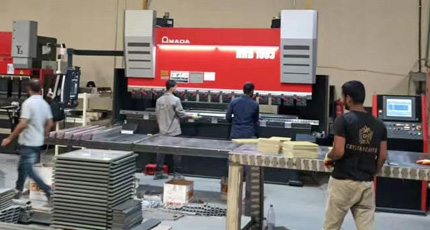
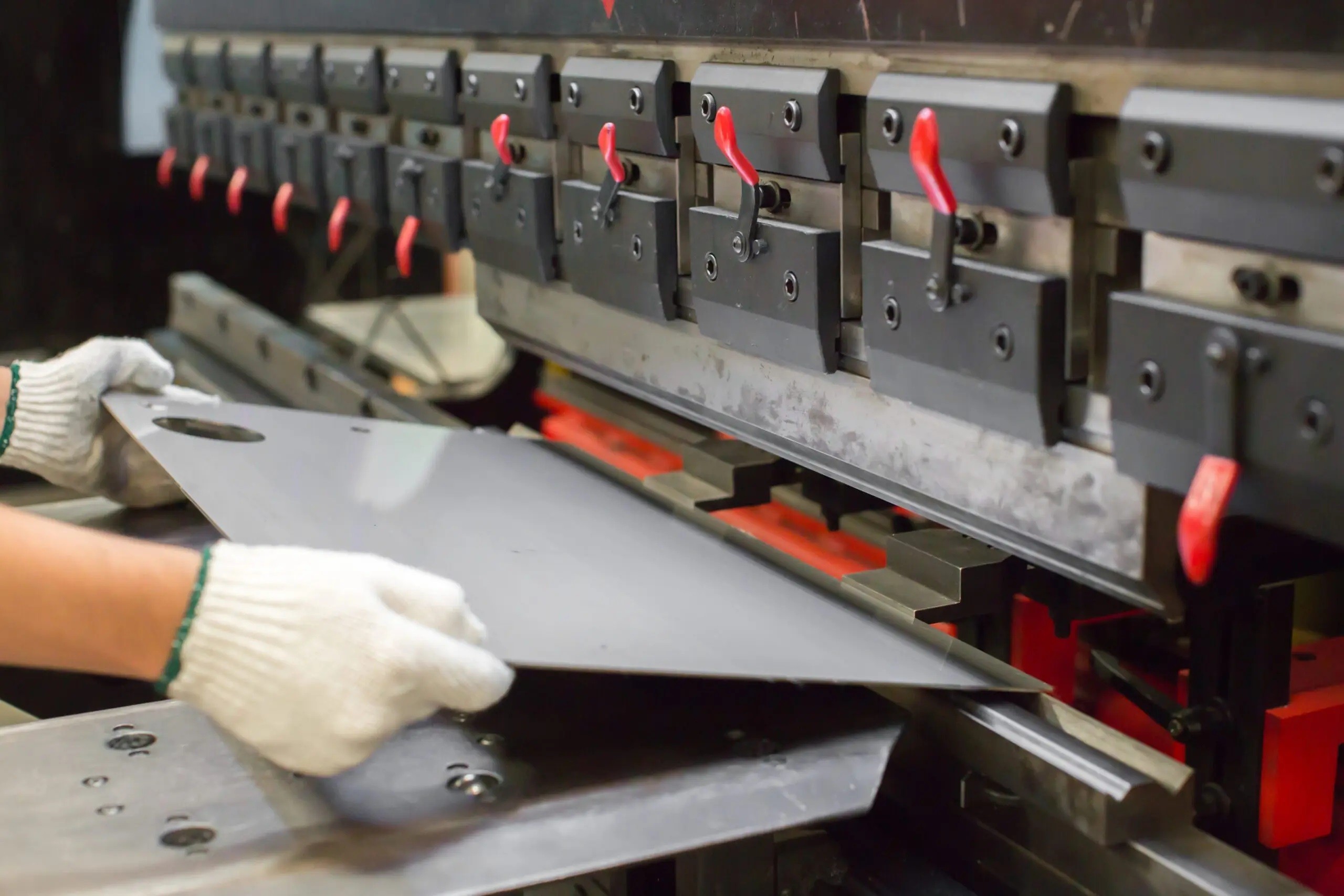
The CNC press brake serves as the "final gate" in sheet metal forming and consistently accounts for the highest scrap rates. Precision control fundamentally requires a closed-loop system combining "material mechanics modeling + dynamic equipment compensation + process database management."
3.1 The Physics of Springback & Compensation Logic
Springback is the inevitable elastic recovery of material after unloading. Its magnitude is influenced by:
Higher material yield strength (σs) → greater springback
Input material grade, thickness, and yield strength (reference supplier certificates or built-in database)
System calculates theoretical bending depth and angle compensation based on DIN 7552/EN 12253 standards
After the first-piece bend, use a high-precision angle measuring device (e.g., Cybelec TouchBend or rongwin integrated laser angle module) to capture actual values
CNC system automatically calculates deviation, generates correction parameters, saves them to the process library, and auto-applies them for subsequent batches
3.2 Deflection Compensation Systems: The "Anchor" for Long-Workpiece Precision
When bending length exceeds 1500mm, ram and bed deformation under load cannot be ignored. Traditional shim compensation is obsolete. Modern CNC press brakes feature two dynamic compensation solutions:
Mechanical-Hydraulic Deflection Compensation: Multiple hydraulic cylinders embedded beneath the bed automatically lift upward based on bending length and pressure, counteracting central sag. Accuracy reaches ±0.3°/2m.
Servo-Active Compensation: Servo motors drive wedge blocks to dynamically adjust bed parallelism in real-time. Faster response, supports segmented pressure distribution (ideal for asymmetric bends). rongwin's next-generation EBC series utilizes dual-redundant sensors + AI adaptive algorithms, boosting compensation accuracy to ±0.1°/3m.
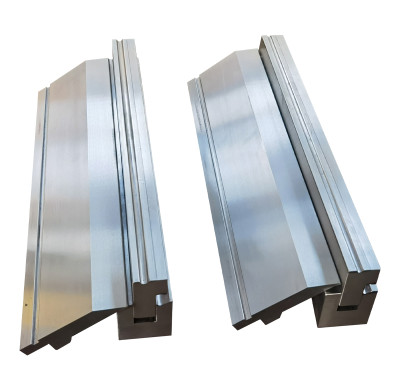
3.3 Tooling Selection & Lifecycle Management
Tooling is not a standard spare part; it is a process carrier. Incorrect selection directly causes surface marking, cracking, and angle instability:
Plate Thickness (mm)
Recommended Lower Die V-Opening
Minimum Bend Radius Suggestion
Common Tooling Material
1.0~2.0
8V~12V
0.8t
Cr12MoV, D2, 40Cr heat-treated
2.5~4.0
12V~16V
1.0t~1.2t
SKD11, DC53, surface nitrided
5.0~8.0
18V~22V
1.5t
High-strength alloy steel + carbide inserts
Tooling Life Extension Strategies: ① Apply dedicated bending lubricants to reduce friction coefficient; ② Avoid overload bending (keep pressure below 85% of rated capacity); ③ Maintain a tooling wear log; mandate replacement when V-opening corner radius increases by >0.5mm; ④ Adopt "quick-change tooling systems" (e.g., European-style clamping), reducing changeover time from 20 minutes to 2 minutes.
🔧 Technical Tip: Bending sequence drastically impacts final accuracy. Follow the principle: "inside-out, small-to-large, avoid interference." Modern CNC systems support 3D bending simulation and collision detection. Always run virtual verification before physical processing to prevent scrap and machine damage from trial-and-error.
IV. Integrated Cutting-Bending Workflow: Breaking Down Silos for Flexible Manufacturing
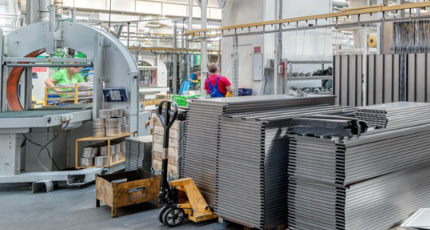
Single-machine performance ceilings have been reached. True capacity leaps come from process synergy. The "data disconnect" and "logistical gap" between cutting and bending are universal efficiency black holes in mid-sized sheet metal shops.
4.1 Software Layer: Intelligent Handoff from CAD/CAM to BendSoft
Unified Data Formats: Use neutral formats like STEP/IGES or specialized sheet metal formats (e.g., DXF with bend lines) to prevent layer loss or scale distortion.
K-Factor & Bend Deduction Tables: Must be calibrated against actual materials, tooling, and machines. rongwin provides "complimentary first-article process calibration" to build exclusive bending parameter libraries for clients.
Nesting Optimization: Laser nesting software must account for bending direction and part layout to prevent post-cut flipping difficulties. Integrating "common-line cutting" and "micro-joint" techniques saves 5%~8% in raw material.
Manual handling is not only inefficient but poses safety risks and positioning errors. Modern lines typically employ:
Laser Side-Loading Systems: Vacuum suction cups or magnetic sheet separators supporting automatic pallet exchange and scrap separation.
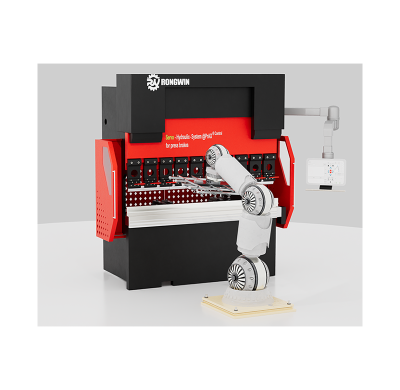
Bending Robots / Gantry Systems: 6-axis robots or Cartesian gantries paired with vision positioning systems (CCD cameras) for automatic part pickup, flipping, and precise bend positioning.
WIP Buffer Carts: Cut parts are temporarily stored on barcode/RFID-tagged carts. The bending system scans the tag to auto-load corresponding programs, enabling "order-driven, on-demand production."
4.3 Cost-Benefit Analysis: ROI Calculation Model for Automation Investment
Static Payback Period: Typically 18~28 months (varies by order saturation and product gross margin)
rongwin Machinery offers a "modular delivery + phased upgrade" pathway. Companies can first establish cutting-bending data integration, then gradually introduce robotics to ease initial capital pressure.
V. Real-World Case Study: How a Mid-Sized European Sheet Metal Shop Solved "Precision Fluctuations & Downtime Crises" with a Systematic Approach
Client Background: Baden-Württemberg, Germany. Specializes in EV battery pack enclosures and energy storage cabinets. Annual processing volume: ~8,000 tons. 65 employees. Legacy line: 3 aging hydraulic press brakes + 2 CO₂ laser cutters. Heavy reliance on 2 senior technicians for manual parameter tuning.
Core Pain Points:
Bending angle fluctuation ±2.5°, monthly customer complaint rate 4.7%, rework costs accounted for 6.2% of total output value
Severe cut edge oxidation, downstream grinding consumed 22% of total shop floor hours
Equipment MTBF only 110 hours, spare parts lead time 8~10 weeks
After veteran operator retirement, newcomer training took 6 months; on-time delivery rate dropped to 78%
Rongwin Diagnosis & Solution
In Q2 2023, Rongwin's technical team conducted a 5-day on-site process audit in Germany, identifying three root causes:
Missing Material Database: 304 stainless steel from different mills showed yield strength variations up to 80MPa, yet press brakes used uniform parameters.
Optical System Degradation: CO₂ laser reflector mirrors were carbon-fouled, actual output power was only 68% of rated, forcing slower cutting speeds and increased heat input.
Maintenance System Void: No periodic inspection logs, hydraulic oil moisture exceeded limits, rail lubrication was inadequate.
Delivered Solution:
Replaced 2 legacy lasers with rongwin RW-F6012 6kW Fiber Laser Cutters, equipped with intelligent gas control modules and auto-focus systems
Installed 1 RW-EBC3200 All-Servo CNC Press Brake, integrated with AI dynamic deflection compensation and closed-loop laser angle measurement
Deployed rongwin BendSoft 4.0 process management software, featuring built-in material library, tooling library, and bending sequence planning engine
Provided "3+2" on-site training: 3 days equipment operation + 2 days process optimization + lifetime remote technical support
Established localized spare parts depot (Stuttgart), core components delivered within 48 hours
Implementation Results (Q1 2024 Data)
Bending angle precision stabilized at ±0.4° (from ±2.5°), customer complaint rate dropped to 0.8%
Cut edge roughness Ra≤3.2μm, grinding hours reduced by 65%, surface treatment qualification rate rose to 99.1%
Equipment OEE improved from 62% to 89%
New operator onboarding cycle shortened to 2 weeks, on-time delivery rate recovered to 94%
Annual comprehensive operating costs decreased by 18.7%, ROI achieved by month 19
"rongwin didn't just deliver two machines; they provided a replicable process standard. We can now accept aerospace structural component orders thanks to this data-driven bending system." —— Dr. Klaus Weber, Production Director
VI. Equipment Lifecycle Management: Maintenance, Training, and Long-Term ROI Calculation Guide
Equipment acquisition is just the beginning. Full lifecycle management is the true profit moat. Many companies view maintenance as a "cost," while industry leaders treat it as an "investment."
6.1 Practical Implementation of Predictive Maintenance
Traditional "fix-it-when-it-breaks" models cause massive unplanned downtime losses. rongwin equipment comes standard with IoT modules that continuously monitor:
CNC Press Brakes: Hydraulic system pressure/temperature/viscosity, servo motor current harmonics, rail vibration spectra, angle sensor drift values
Data uploads to a cloud analytics platform where machine learning algorithms predict failure probabilities. For example: when hydraulic oil particle counts exceed ISO 18/16/13 thresholds for 3 consecutive days, the system automatically issues a "replace filter + oil purification" work order 7 days in advance, preventing servo valve sticking that could cost ¥50,000+ in repairs.
6.2 Building an Operator Skills Matrix
The higher the automation level, the greater the need for hybrid talent who "understand processes, can analyze data, and optimize parameters." We recommend a three-tier certification system:
Level
Core Competencies
Assessment Method
Target Roles
L1 Operator
Machine start/stop, program calling, basic fault recognition, safety protocols
"Annual Revenue Increase" includes order capacity expansion from higher throughput and premium pricing from improved accuracy. "Annual Cost Savings" covers labor, materials, energy, scrap, rework, and downtime losses. rongwin sales engineers provide customized "3-Year TCO Comparison Spreadsheets," enabling data-driven decisions over gut feelings.
VII. Industry Trends: Practical Implementation of AI Inspection, IoT Connectivity, and Automated Loading/Unloading
The future of sheet metal fabrication doesn't belong to "single-machine performance monsters," but to "intelligent flexible production lines." Three trends are already deployed at industry-leading facilities:
7.1 AI Visual Inspection: Leaping from "Sampling" to "100% Inspection"
Traditional bending quality control relies on manual caliper measurements—slow, labor-intensive, and prone to missed defects. AI industrial cameras combined with deep learning algorithms scan bending angles, surface marking depth, and scratches in real-time. rongwin has integrated an "online angle measurement + AI judgment" module with <0.1% false-positive rate and <0.5 seconds/part inspection speed,彻底 eliminating the nightmare of "first-article pass, batch scrap."
7.2 Digital Twin: Virtual Commissioning Replaces Physical Trial-and-Error
Before equipment leaves the factory, 3D modeling and kinematic simulation verify bending sequences, robot trajectories, and rack layouts. Clients can adjust parameters in a virtual environment to output optimal configurations. Actual commissioning time is reduced by 70%, and first-article success rates exceed 92%.
7.3 Green Manufacturing: Energy Optimization & Low-Carbon Processes
The EU Carbon Border Adjustment Mechanism (CBAM) and domestic dual-carbon targets are forcing manufacturers toward green transition. rongwin's next-generation equipment features:
Variable Frequency Drive (VFD) hydraulic systems (on-demand energy supply, 25% power savings)
Smart standby mode (auto downshift after 10 min idle, wake-up <3 seconds)
N₂ recovery & reuse interface (30% gas cost reduction)
Regenerative braking energy feedback (bending return stroke energy converted to electricity)
Single equipment carbon reduction reaches 8~12 tons annually, assisting clients in achieving ISO 50001 certification and green supply chain audits.
VIII. Frequently Asked Questions (FAQ)
Q1: How to scientifically calculate CNC press brake tonnage? Is bigger always better?
A: Bending force calculation formula: P = (650 × S² × L) / V (P: kN, S: plate thickness mm, L: bending length m, V: lower die V-opening mm). Tonnage only needs to cover maximum working conditions. Excessive tonnage increases machine footprint, energy consumption, and tooling costs. rongwin recommends a 15%~20% safety margin and provides an online tonnage calculator for client self-verification.
Q2: Can laser cutters replace waterjet or plasma cutters?
A: Each serves a distinct purpose. Fiber lasers excel at ≤25mm metals with high precision, speed, and minimal HAZ. Waterjets suit non-metals, composites, or heat-sensitive applications. Plasma is ideal for thick-plate rough machining (>30mm). For pure sheet metal shops, the laser + press brake combination covers 90%+ of production needs.
Q3: Are domestic CNC systems stable compared to Cybelec/Delem?
A: Modern domestic CNC systems utilize ARM architecture + RTOS, supporting EtherCAT bus, multi-axis synchronization, and graphical programming. rongwin equipment can be equipped with the self-developed rongwin Control 3.0, fully compatible with European standard G-codes and bending process libraries, with multi-language interfaces to lower training barriers. Core servo components are sourced from Japanese/German brands to ensure dynamic response accuracy.
Q4: How to reduce changeover time for high-mix, low-volume production?
A: Implement the "Three-Step Method": ① Adopt quick-change tooling systems (pneumatic/magnetic clamping); ② Use CNC program group management for one-click order calling; ③ Introduce an automated tooling library (ASRS) that delivers corresponding dies based on process routing. rongwin's EBC series supports the "3-minute changeover, 1-minute first-piece debugging" standard, fully meeting flexible manufacturing demands.
Q5: How is overseas equipment after-sales response guaranteed?
A: Rongwin operates 6 regional service centers globally (Europe, North America, Southeast Asia, Middle East, Australia, South America) with localized core spare parts inventory. We provide a three-tier response mechanism: "remote AR glasses guidance + video diagnostics + 48-hour air freight for critical parts." Contracted clients receive "complimentary annual health inspections + process parameter optimization upgrades," ensuring equipment remains in optimal condition throughout its lifecycle.
Conclusion: Precision is the Baseline, Efficiency is the Lifeline, Systems are the Future
Sheet metal fabrication has never been more challenging yet opportunity-rich. Order fragmentation, compressed lead times, rising labor costs, and stringent quality requirements are reshaping industry rules. Simultaneously, technological advancements offer unprecedented breakthrough tools: from precise energy control in laser cutting to closed-loop compensation algorithms in CNC bending; from seamless workflow data integration to AI and IoT intelligence.
Equipment selection is not a parameter comparison game; it is a systematic engineering process rooted in process logic. The true winners are not those who own the most expensive machines, but those who best understand how to make machines "communicate," data "decide," and processes "self-optimize."
Nanjing rongwin Machinery Technology Co., Ltd. has specialized in metal forming equipment for over a decade, serving 300+ manufacturing enterprises worldwide. We don't just supply CNC press brakes, laser cutters, and automated handling systems; we deliver end-to-end solutions encompassing "process diagnostics + equipment deployment + personnel training + continuous optimization." Because we deeply understand: your success is the only reason rongwin exists.
Get Your Custom Process Optimization Plan Today
Whether you are planning new equipment, upgrading production lines, or breaking through efficiency bottlenecks, rongwin's technical team provides complimentary on-site surveys, 3D bending simulation validation, and TCO calculation reports.
📞 International Hotline: 0086-15156147667 | 📧 Email: info@rongwin.com
Your Partner in Smart Custom Metal Manufacturing Solutions-For Life
Join Our Distributors
Are you looking for a partnership with huge market potential and generous profit margins? Asour distributor, you will receive comprehensive market support, high-quality product resourcesand professional business training. Contact us now to learn more about becoming ourdistributor and start your journey to success!
*Email
Phone
*Title
*Content
Upload
Only supports .rar/.zip/.jpg/.png/.gif/.doc/.xls/.pdf, maximum 20MB.