

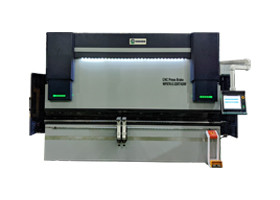
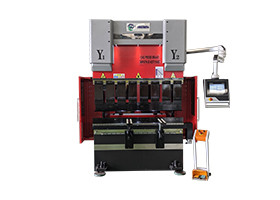
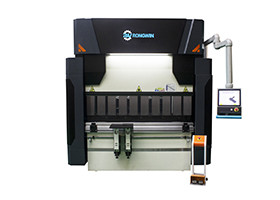











CNC Press Brake Buyer’s Guide: Selection, Maintenance & ROI | 2026
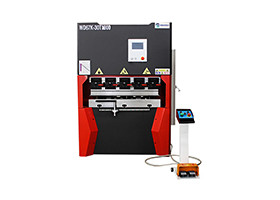
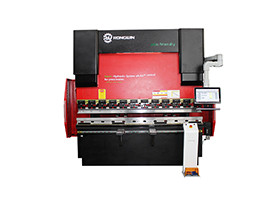
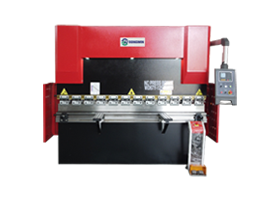
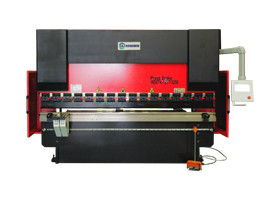
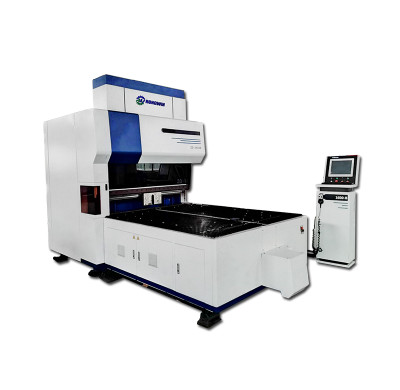
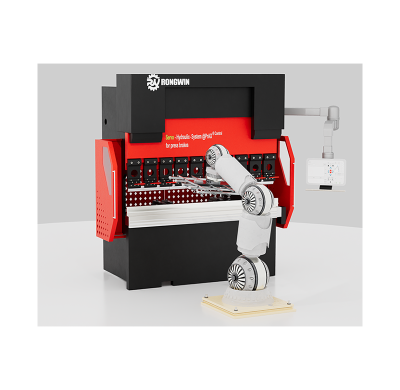
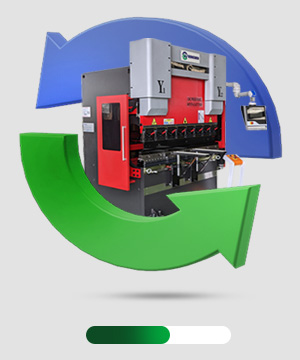
If you have ever managed a sheet metal fabrication shop, you already know that bending is rarely just about pushing metal. It is about precision, repeatability, operator confidence, and profitability. A single miscalculated bend angle, an improperly crowned bed, or a mismatched V-die can trigger a cascade of rework, delayed shipments, and eroded margins. In today's highly competitive metal fabrication landscape, the CNC press brake is no longer just a machine—it is the backbone of your shop's output quality. Yet, despite its critical role, many international buyers struggle with the exact same questions: How do you accurately match tonnage and bed length to your actual part mix? Should you choose a traditional hydraulic press brake, a servo-electric model, or a hybrid system? How do you verify bending accuracy claims without relying on marketing brochures? And once the machine arrives on your floor, how do you ensure it stays within ±0.5° consistency for years, not months? This comprehensive guide answers those questions with engineering-backed clarity. Whether you are a mid-sized job shop in Germany, an industrial manufacturer in North America, or a growing fabrication enterprise in Southeast Asia, you will find actionable frameworks, real-world troubleshooting protocols, and transparent buying criteria. We will walk through exact tonnage calculations, control system comparisons, tooling selection formulas, deflection compensation strategies, predictive maintenance schedules, and automation integration pathways. By the end, you will know exactly what to look for, what questions to ask suppliers, and how to structure a CNC press brake purchase that delivers measurable ROI. Let us begin with a story that mirrors the exact pain points we hear from workshop managers across four continents. In late 2022, a European HVAC duct manufacturer reached out with a familiar frustration. Their existing press brake had been running for seven years, producing everything from flanges to brackets. Over time, however, they noticed a creeping decline in quality. Simple 90-degree bends in 3mm stainless steel were consistently off by 1.5° to 2°. The backgauge drifted during multi-step sequences. Springback compensation felt like guesswork. Their best operator was spending hours doing trial-and-error test bends, adjusting parameters manually, and reworking parts that should have been finished on the first cycle. After a joint engineering review, the root causes became clear: The solution was not simply to buy a bigger machine. It was to implement a precision-engineered system that matched their actual part geometry, material specifications, and operator workflow. After evaluating several international options, they partnered with Rongwin for a 100-ton hydraulic CNC press brake equipped with a Delem DA-69S controller, CNC hydraulic crowning, laser backgauge positioning, and angle measurement compensation via the Y1/Y2 axes. The results within 90 days were measurable: This is not an anomaly. It is the direct outcome of selecting a CNC press brake with precision engineering, intelligent control logic, and supplier support that understands shop-floor realities. In the sections that follow, we will break down exactly how you can replicate this success in your own operation. A CNC press brake is a computer-controlled sheet metal bending machine that uses a ram (upper tool) and bed (lower tool/die) to form precise angles and profiles in metal plates, tubes, and structural components. Unlike manual or NC (numerical control) press brakes, which rely on mechanical stops and operator memory, a true CNC system integrates programmable axes, real-time feedback loops, automated backgauge positioning, and dynamic deflection compensation. The "CNC" designation specifically refers to how the machine executes bends. Modern CNC press brakes typically control multiple axes simultaneously: When these axes are synchronized through advanced interpolation algorithms, the machine can bend complex geometries—multiple angles, flanges with different radii, stepped profiles—without manual intervention. This directly translates to three business advantages: In modern fabrication shops, the CNC press brake is no longer a standalone tool. It integrates with laser cutting machines for seamless workflow, ERP/MES systems for job tracking, and robotic bending cells for lights-out production. Selecting the right system is a strategic investment that impacts your quoting capability, delivery timelines, and competitive positioning. Through years of supporting fabricators across North America, Europe, the Middle East, and Southeast Asia, we have identified recurring sourcing challenges. Understanding these pain points will help you ask the right questions during supplier evaluation and avoid costly missteps. Many buyers calculate tonnage based on theoretical formulas but forget that real-world bending involves variable material hardness, inconsistent thickness tolerances, and multi-step bending sequences that concentrate load. More critically, a press brake rated at "100 tons" assumes even load distribution. Without CNC hydraulic crowning or mechanical crowning, the center of the bed deflects, causing the middle of the part to bend shallower than the ends. The result? A part that measures 90.2° at the edges but 88.5° in the center. Buyers must demand crowning systems and verify bed stiffness through engineering data, not just brochure claims. CNC controllers are the brain of the press brake. Delem and Cybelec dominate the international market due to their mature libraries, intuitive interfaces, and global service networks. However, some manufacturers use proprietary controllers that lack third-party support, offline programming software compatibility, or future upgrade paths. Buyers should verify: Does the controller support DXF/STEP import? Can it integrate with offline programming suites like Radan, SigmaNEST, or Lantek? Is there local service coverage for the specific controller model? Material springback is a fundamental challenge in bending. High-strength low-alloy (HSLA) steel, stainless steel, and aluminum each behave differently. Some suppliers quote "±0.5° accuracy" but fail to disclose whether that tolerance includes automatic angle measurement and real-time compensation. Without a touchless angle measurement system (TAC) or laser-based verification, the CNC is guessing. Always ask how the machine compensates for springback and whether it supports material database updates. A press brake is a capital asset that must run for 10+ years. The true cost emerges when hydraulic valves fail, linear guides wear, or CNC boards need replacement. International buyers frequently discover that their supplier cannot ship genuine spare parts within 72 hours or lacks local technicians for calibration. Before purchasing, request: spare parts catalog pricing, average lead times, warranty terms, and remote diagnostic capabilities. Rongwin, for example, maintains regional service hubs and provides OEM-certified replacement components with documented traceability. A common mistake is buying a high-tonnage machine for thin-gauge work or a short bed for large panels. This leads to underutilized capacity, poor tool clearance, and inefficient tooling strategies. Buyers should conduct a part-mix analysis: 80% of your parts likely fall within specific thickness/length ranges. Optimize the press brake specifications for that 80%, not the theoretical 20% outliers. This is why Rongwin engineers request part drawings, material grades, and annual volume projections before finalizing configurations. Selecting a CNC press brake is not a one-size-fits-all decision. It requires matching machine specifications to your operational reality. The following framework breaks down the selection process into actionable, engineering-backed steps. Tonnage calculation follows a standardized formula, but practical application requires adjustments for material conditions: Standard Formula (Air Bending): Example: Bending 6m length of 3mm mild steel (σ = 450 N/mm²) with a 24mm V-die: Always add a 20–30% safety margin for material variation, multi-bend setups, and future expansion. For bed length, add 200–300mm to your longest part to allow for tool overhang and safe operator clearance. The CNC controller dictates usability, programming efficiency, and automation readiness. Here is a comparative overview: Ask suppliers whether the controller supports: automatic tool library management, offline programming export (TXT/CSV/3D), USB/ethernet job transfer, and remote diagnostics. Rongwin press brakes come pre-configured with Delem or Cybelec systems, fully tested with material compensation libraries for steel, stainless, aluminum, and copper alloys. Traditional Hydraulic: Proven reliability, high tonnage capacity, forgiving for heavy-gauge work. Uses proportional valves and dual-cylinder synchronization. Best for: heavy fabrication, intermittent high-load jobs, budget-conscious buyers. Servo-Electric: Extremely energy efficient, near-silent operation, precise ram positioning. Uses ball screws and servo motors. Best for: thin-gauge precision, cleanroom environments, energy-cost-sensitive regions. Limitation: lower max tonnage compared to hydraulic. Hybrid (Servo-Hydraulic): Combines electric servo control with hydraulic actuation. Offers electric precision with hydraulic power. Best for: high-accuracy medium-thickness work, shops transitioning from traditional hydraulic systems. Decision framework: If your material thickness rarely exceeds 6mm and energy savings are critical, consider electric. If you bend 10–25mm steel regularly, hydraulic or hybrid remains the industry standard. Rongwin engineers all three configurations to ISO 12100 safety standards and CE certification requirements. Bending accuracy is not just about the CNC. It is about how the machine handles physical deformation under load. When a press brake bends a long sheet, the bed and ram experience elastic deflection. Without compensation, the center of the bend will be shallower than the edges. Solutions include: For ±0.3° to ±0.5° accuracy across full bed length, hydraulic or CNC mechanical crowning is mandatory. Always request deflection compensation curves from the manufacturer and verify them with third-party calibration reports. Tooling accounts for 30–40% of bending accuracy. V-die opening should be 6–8× material thickness for mild steel, 8–10× for stainless, and 8–12× for aluminum. Shoulder angle affects surface quality and bend consistency. 84° shoulders provide sharper bends but increase marking; 90° shoulders distribute load more evenly. Punch selection matters equally: acute punches for tight inside radii, hemming punches for folded edges, radius punches for thick materials. Quick-change tooling systems (clamps, hydraulic wedges) reduce setup time by 60–80%. Rongwin offers ISO 21498-compliant tooling libraries, with material-specific coatings (TiN, DLC) for stainless and aluminum to prevent galling and extend tool life. Even precision machines require diagnosis. Below are the most frequent operational errors, their root causes, and verified correction methods. Cause: Bed deflection, uneven V-die wear, unbalanced ram synchronization. Cause: Ball screw backlash, encoder signal interference, linear guide contamination. Cause: Incorrect bend radius, outdated material compensation table, insufficient overbend depth. Cause: Hydraulic oil viscosity change, clogged filters, proportional valve contamination. Cause: Insufficient clamping pressure, misaligned tool holder, worn wedge surfaces. Cause: Dirty dies, incorrect shoulder angle, lack of protective film, high contact pressure. Cause: Limit switch misalignment, encoder cable damage, CNC parameter corruption. Pro tip: Always document error codes, operating conditions, and material specs before contacting support. This reduces diagnostic time by 50% and ensures accurate spare part dispatch. A press brake is designed for 15–20 years of service, but its lifespan depends on maintenance discipline. Neglect leads to premature component failure, accuracy degradation, and unplanned downtime. Below is a manufacturer-aligned maintenance schedule optimized for international operating environments. Following this protocol reduces unplanned downtime by 75% and maintains ±0.5° accuracy for the machine's entire lifecycle. Rongwin provides detailed maintenance manuals, video tutorials, and regional service technicians for calibration support. Remote diagnostics via secure VPN allow factory engineers to verify parameters without on-site travel, accelerating troubleshooting. The metal fabrication industry is undergoing a rapid transformation. Industry 4.0 principles are no longer optional—they are competitive necessities. Here is how modern CNC press brakes are evolving to meet future demands: Collaborative robots (cobots) and traditional 6-axis arms are increasingly paired with CNC press brakes for automated part loading/unloading. Modern controllers support I/O communication with Fanuc, KUKA, ABB, and Yaskawa systems. Safety-certified fencing, force-limiting grippers, and vision systems enable 24/7 operation with minimal supervision. Sensors monitoring hydraulic pressure, oil temperature, motor current, and vibration feed data to cloud platforms. Machine learning algorithms detect anomalies before failure occurs, scheduling maintenance during planned downtime rather than emergency stoppages. This shifts maintenance from reactive to predictive, extending component life by 30–40%. Software suites like Delem DA-CAD, SigmaNEST Press Brake, and Lantek Bend allow engineers to simulate bends, detect collisions, and optimize tool sequences before the job reaches the floor. Digital twins replicate the physical machine's behavior in 3D, reducing programming time by 70% and eliminating costly trial runs. Modern press brakes communicate directly with manufacturing execution systems, reporting job completion, cycle times, scrap rates, and tool wear. This enables real-time costing, dynamic scheduling, and traceability for ISO 9001 compliance. Rongwin machines support OPC-UA, MQTT, and standard TCP/IP protocols for seamless factory integration. Servo-electric drives, variable displacement pumps, and regenerative braking reduce power consumption by 40–60%. Hydraulic systems now feature closed-loop pressure control, idle-state power reduction, and biodegradable oil options. These advancements align with international sustainability certifications and reduce total cost of ownership. Nanjing Rongwin Machinery Technology Co., Ltd. has spent over a decade refining press brake engineering to meet the exacting standards of international manufacturers. Our approach combines precision manufacturing, transparent engineering, and customer-centric support. Here is what sets us apart: Our engineering team does not sell machines; we solve bending challenges. When you share part drawings, material specs, and volume projections, we respond with a feasibility analysis, tooling recommendation, and ROI projection—not a generic catalog price. Before finalizing your CNC press brake purchase, verify the following: If you checked fewer than 7 boxes, your current procurement process may expose you to accuracy drift, hidden costs, or operational bottlenecks. Use this checklist as a supplier evaluation tool, not just a shopping guide. Standard configurations ship in 25–40 days after deposit. Custom bed lengths, specialized controllers, or integrated automation may require 45–60 days. We provide production tracking photos and pre-shipment calibration certificates. Most ISO-standard tooling is compatible if the clamp system matches. We provide adapter kits and recommend a tooling compatibility audit before shipment to ensure secure mounting and accurate positioning. Accuracy depends on the entire system: control algorithm, encoder resolution, hydraulic response, and mechanical stiffness. Delem and Cybelec both achieve ±0.3°–0.5° when paired with proper crowning and angle compensation. Controller choice should align with operator skill level and automation goals. We offer 5–7 days of on-site or virtual training covering: CNC programming, backgauge setup, tooling installation, safety protocols, maintenance procedures, and troubleshooting. Comprehensive video libraries and multilingual manuals are included. Yes, following manufacturer-recommended intervals maintains warranty validity. Oil contamination is the leading cause of hydraulic valve failure and ram synchronization drift. We provide oil specifications, filtration protocols, and remote monitoring options. Absolutely. Use polished 84° dies, apply PE protective film, optimize V-die opening to 8–12× thickness, and reduce contact pressure. Rongwin offers DLC-coated punches and anti-marking tooling kits specifically for non-ferrous materials. Request engineering reports showing bed stiffness, crowning force curves, and third-party calibration certificates. Ask for a live test video bending a 4m test plate with angle verification at 3 positions. Reputable manufacturers provide transparent data, not just marketing claims. We accept 30% T/T deposit, 70% balance against copy of B/L; irrevocable L/C at sight; and secure escrow for new buyers. Flexible installment options are available for qualified customers with verified trade history. Selecting a CNC press brake should never be a guessing game. Whether you are replacing aging equipment, expanding production capacity, or integrating automated bending cells, your decision should be backed by engineering data, transparent specifications, and supplier accountability. At Rongwin, we start with your parts, not our catalogs. Share your drawings, material grades, thickness ranges, and annual volume. Our application engineers will return: Contact our international engineering team today. Receive a customized CNC press brake configuration, transparent pricing, and a no-obligation feasibility analysis tailored to your part mix and production goals. Or visit www.metalworkmaster.com for technical specs, video demonstrations, and live inventory. Disclaimer: Specifications, control systems, and pricing are subject to regional availability and engineering verification. Always consult certified press brake technicians for application-specific validation. Rongwin reserves the right to update technical parameters in alignment with international manufacturing standards.
How to Choose, Maintain, and Maximize a CNC Press Brake: The Ultimate International Buyer's Guide
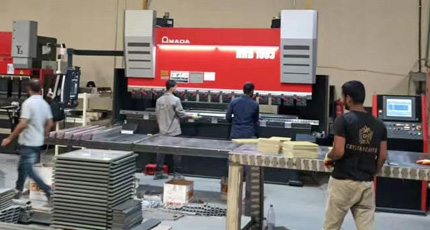
A Shop-Floor Story: From Constant Rejects to 99.2% First-Pass Yield
"We were not just losing material. We were losing time, morale, and customer trust. The machine was not broken, but it was not solving our problems anymore."
Metric
Before Upgrade
After Rongwin CNC Press Brake
First-Pass Yield Rate
78.4%
99.2%
Average Setup Time (per job)
45 minutes
12 minutes
Bending Angle Tolerance
±1.5° to ±2.2°
±0.3° to ±0.5°
Operator Intervention
High (manual correction required)
Minimal (CNC auto-compensation)
What Exactly Is a CNC Press Brake and Why Does It Matter?
5 Critical Pain Points International Buyers Face When Sourcing CNC Press Brakes
1. Overestimated Tonnage & Underestimated Bed Deflection
2. Control System Confusion: Delem vs. Cybelec vs. Proprietary
3. Springback & Material Variability Blind Spots
4. After-Sales Support & Spare Parts Logistics
5. Misalignment Between Machine Capability and Actual Part Mix
How to Choose the Right CNC Press Brake: A Step-by-Step Technical Guide
Tonnage & Bed Length: Matching Machine to Material
P = (K × σ × L × t²) / (8 × W)
P = (1.33 × 450 × 6000 × 3²) / (8 × 24) ≈ 168 tonsCNC Control Systems: Delem, Cybelec, and Beyond
Controller
Strengths
Best For
Delem DA-69T/DA-69S
2D/3D graphical interface, angle measurement compensation, offline programming compatibility, multi-axis interpolation
High-mix, high-volume shops; complex part programming; automation integration
Cybelec ModEva/ModEva S
Intuitive touchscreen, robust material library, servo-hydraulic compatibility, real-time correction
Mid-sized shops; operator-friendly environments; consistent part runs
ESA S660/S800
High customization, advanced networking, IoT-ready architecture
Smart factories; Industry 4.0 integration; enterprise-level data tracking
Hydraulic vs. Electric vs. Hybrid: Which Fits Your Operation?
Bending Accuracy, Crowning, and Deflection Compensation
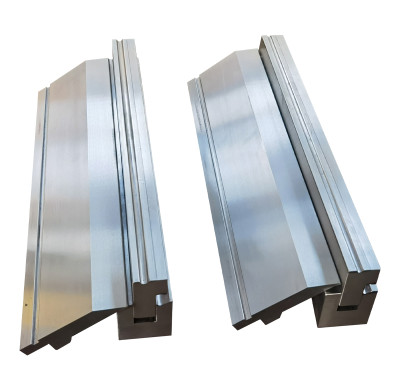
Tooling & Die Selection: The Unsung Hero of Precision
Real-World Troubleshooting: Fixing the Top 7 Press Brake Errors
1. Inconsistent Bend Angles Across Part Width
Fix: Activate crowning system, verify Y1/Y2 axis parallelism via dial indicator, replace worn die shoulders, recalibrate hydraulic pressure valves.2. Backgauge Positioning Drift
Fix: Perform backlash compensation via CNC parameters, clean and lubricate rails, replace worn bearings, verify encoder mounting rigidity.3. Excessive Springback on High-Strength Steel
Fix: Update material database, increase overbend by 0.5°–1.2°, verify V-die opening matches material grade, enable angle measurement compensation.4. Ram Speed Fluctuation During Descent
Fix: Check oil temperature (maintain 35–45°C), replace return filters, clean proportional spool valves, bleed air from hydraulic lines.5. Tool Clamping Failure During Multi-Step Bends
Fix: Verify clamping pressure matches manufacturer specs, clean and re-align tool base, replace damaged wedges, use quick-change system with anti-tilt design.6. Surface Marking on Stainless/Aluminum Parts
Fix: Switch to 84° polished dies, apply plastic/PE protective film, reduce bend force by optimizing V-opening, use DLC-coated punches.7. CNC Alarm: Y-Axis Position Error or Overtravel
Fix: Check mechanical stops, replace damaged cables, restore CNC backup, recalibrate reference points following factory procedure.Maintenance & Longevity: Maximizing ROI on Your Rongwin CNC Press Brake
Daily Checks (Operator Level)
Weekly Tasks
Monthly Tasks
Quarterly/Semi-Annual Tasks
Annual Overhaul
The Future of Press Brake Technology: Automation, IoT, and Smart Fabrication
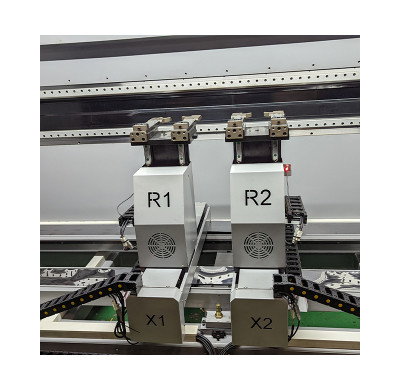
1. Robotic Bending Integration
2. IoT & Predictive Maintenance
3. Offline Programming & Digital Twins
4. ERP/MES Integration
5. Energy Optimization & Sustainability
Why Global Fabricators Choose Rongwin: Quality, Support, and Customization
Quick Decision Checklist: Are You Ready to Upgrade?
Frequently Asked Questions (FAQ)
1. What is the typical delivery time for a CNC press brake?
2. Can I use my existing tooling with a new Rongwin press brake?
3. How does CNC press brake accuracy compare across different controllers?
4. What training do you provide for international customers?
5. Is hydraulic oil replacement mandatory during warranty?
6. Can the CNC press brake bend aluminum or copper without marking?
7. How do I verify supplier claims about deflection compensation?
8. What payment terms are available for international orders?
Next Steps: Request a Free Bending Feasibility Analysis
Ready to Eliminate Bending Inconsistency and Boost Your Shop's Throughput?